

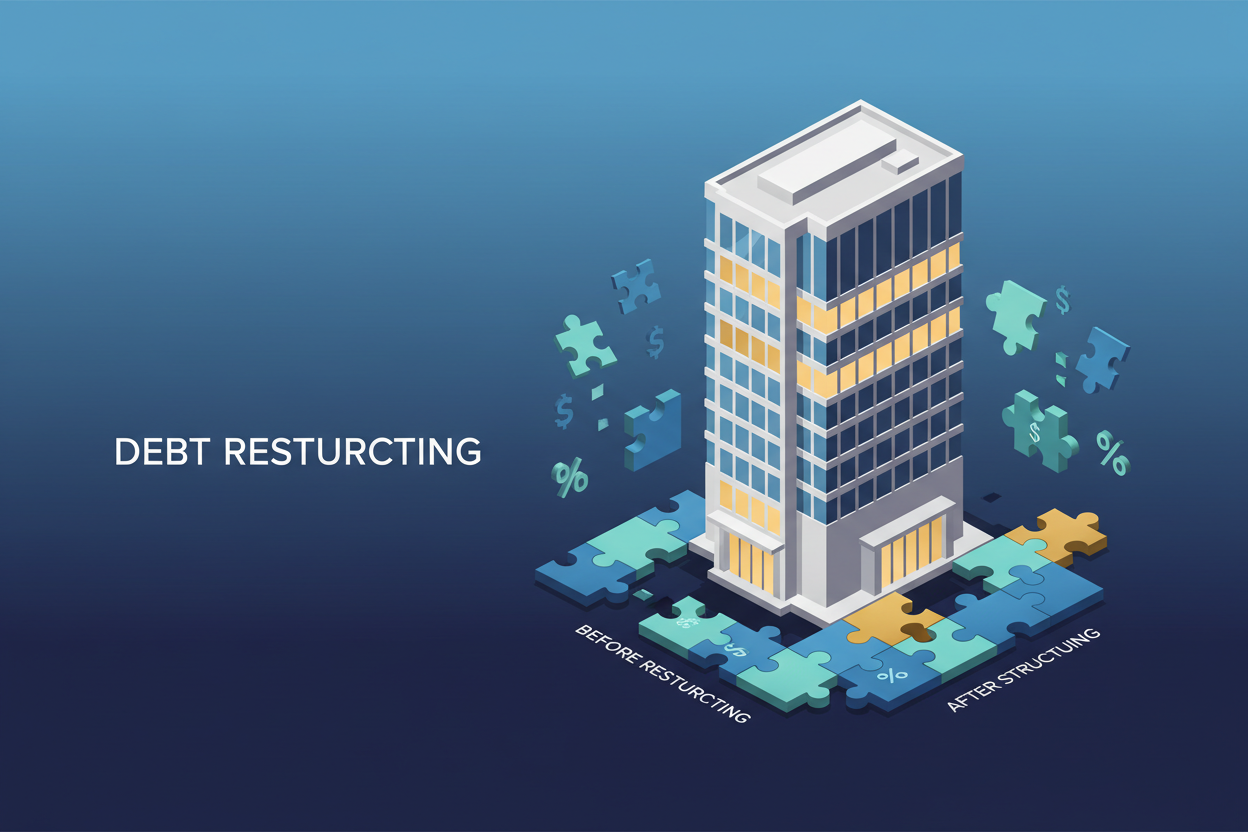
Debt Structuring for Commercial Properties: A Complete Guide to Optimizing Your Investment Strategy
When I first stepped into the world of commercial real estate investing, I quickly realized that understanding debt structuring wasn’t just helpful—it was absolutely essential. The difference between a profitable investment and a financial nightmare often comes down to how well you structure your commercial property debt. Whether you’re a seasoned investor or just starting your journey, mastering debt structuring can make or break your commercial real estate portfolio.
Commercial property debt structuring involves organizing and arranging the various forms of financing used to acquire, develop, or refinance commercial real estate. It’s about finding the right balance between risk and reward while maximizing your investment potential. In this comprehensive guide, we’ll explore everything you need to know about structuring debt for commercial properties, from basic concepts to advanced strategies that seasoned professionals use.

Understanding Commercial Property Debt Structuring Fundamentals
At its core, debt structuring for commercial properties is the art and science of arranging financing in a way that optimizes cash flow, minimizes risk, and maximizes returns. Unlike residential real estate, commercial properties offer numerous financing options and structures that can be tailored to specific investment goals and market conditions.
The foundation of effective debt structuring lies in understanding your property’s cash flow potential, market conditions, and your own financial objectives. Every commercial property is unique, and what works for a multi-family apartment complex might not be suitable for a retail shopping center or office building.
One of the first lessons I learned was that commercial lenders view deals very differently than residential lenders. They’re primarily concerned with the property’s ability to generate income rather than the borrower’s personal financial situation, though both factors certainly matter. This income-focused approach opens up opportunities for creative structuring that simply aren’t available in residential real estate.
Types of Commercial Real Estate Debt Structures
The commercial real estate financing landscape offers several distinct debt structures, each with its own advantages and considerations. Understanding these options is crucial for making informed decisions about your property investments.
Traditional bank loans remain the most common form of commercial real estate financing. These typically offer competitive interest rates and terms, especially for borrowers with strong credit profiles and properties with stable cash flows. However, banks often require substantial down payments and have strict underwriting criteria that can limit flexibility.
SBA loans present an attractive alternative for owner-occupied properties or smaller investment properties. The Small Business Administration’s guarantee reduces lender risk, often resulting in more favorable terms for borrowers. The 504 loan program, in particular, can provide long-term, fixed-rate financing with lower down payment requirements.
CMBS loans, or Commercial Mortgage-Backed Securities, offer another avenue for financing larger commercial properties. These loans are packaged and sold to investors as securities, allowing lenders to offer competitive rates for qualifying properties. While CMBS loans can provide excellent terms, they often come with prepayment penalties and less flexibility for modifications.
Private lending has grown significantly in recent years, offering speed and flexibility that traditional lenders often can’t match. Hard money lenders, private equity firms, and individual investors can provide creative solutions for unique situations, though typically at higher interest rates.
Key Components of Effective Debt Structuring
Successful debt structuring requires careful consideration of several critical components that work together to create an optimal financing package. The loan-to-value ratio, or LTV, represents the percentage of the property’s value that you’re borrowing. Most commercial lenders prefer LTV ratios between 70% and 80%, though this can vary based on property type and market conditions.
The debt service coverage ratio, commonly known as DSCR, measures the property’s ability to cover its debt payments from operating income. Lenders typically require a DSCR of at least 1.20, meaning the property generates 20% more income than needed to cover debt service. Understanding and optimizing this ratio is crucial for securing favorable financing terms.
Interest rate structure plays a vital role in long-term investment success. Fixed-rate loans provide predictability and protection against rising rates, while variable-rate loans might offer lower initial rates with the risk of future increases. Some investors prefer hybrid structures that combine elements of both.
Amortization schedules determine how quickly you’ll build equity in the property and affect your monthly cash flow. Longer amortization periods reduce monthly payments but result in slower equity building, while shorter periods do the opposite. Some commercial loans offer interest-only periods that can improve cash flow during lease-up or renovation phases.
Strategic Approaches to Commercial Property Debt Optimization
Developing a strategic approach to debt structuring requires understanding both your immediate needs and long-term objectives. One effective strategy involves layering different types of financing to optimize overall terms and conditions. For example, you might use a traditional bank loan for the majority of financing while incorporating a smaller mezzanine loan to bridge any equity gaps.
Timing plays a crucial role in debt structuring success. Market conditions, interest rate environments, and property cycles all influence the availability and terms of financing options. I’ve seen investors save significant amounts by timing their financing to coincide with favorable market conditions or by structuring loans to mature during anticipated refinancing opportunities.
Cross-collateralization represents another advanced strategy where multiple properties secure a single loan or loan package. This approach can provide access to better terms and higher loan amounts, though it also increases risk by tying multiple properties together. It’s particularly useful for portfolio acquisitions or when one strong property can help finance the acquisition of another with weaker fundamentals.
Recourse versus non-recourse debt structures significantly impact personal liability and risk exposure. Non-recourse loans limit liability to the property itself, protecting personal assets in case of default. However, these loans often come with higher rates and stricter terms. Recourse loans provide personal guarantees but typically offer better pricing and more flexibility.
Common Debt Structuring Mistakes to Avoid
Throughout my years in commercial real estate, I’ve witnessed numerous debt structuring mistakes that could have been easily avoided with proper planning and understanding. One of the most common errors is focusing solely on interest rates while ignoring other crucial terms and conditions.
Overleveraging represents another significant pitfall. While maximizing leverage can amplify returns during good times, it also increases vulnerability during market downturns or when properties experience vacancy or income declines. Finding the right balance between leverage and safety requires careful analysis of worst-case scenarios.
Ignoring prepayment penalties and yield maintenance provisions can prove costly when circumstances change. Many commercial loans include substantial penalties for early payoff, which can limit flexibility and increase costs during refinancing or sale situations. Understanding these provisions upfront allows for better decision-making and planning.
Inadequate due diligence on lender requirements and processes can lead to delays, additional costs, or deal failures. Different lenders have varying underwriting standards, documentation requirements, and approval processes. Taking time to understand these differences can save significant time and money throughout the financing process.
Working with Professionals in Debt Structuring
The complexity of commercial real estate debt structuring makes professional guidance invaluable for most investors. Commercial mortgage brokers bring market knowledge and lender relationships that can access better terms and identify creative solutions. They understand current market conditions and can navigate the various options available to find optimal financing structures.
Real estate attorneys play a crucial role in reviewing loan documents, identifying potential issues, and ensuring that terms align with your investment strategy. The legal complexity of commercial loans makes professional review essential for protecting your interests and avoiding future problems.
Accountants and tax professionals help structure debt in ways that optimize tax benefits and cash flow. They can identify opportunities for depreciation benefits, interest deductions, and other tax advantages that improve overall investment returns.
Property appraisers provide the valuations that form the foundation of most financing decisions. Working with experienced commercial appraisers who understand your property type and market can help ensure accurate valuations that support your financing goals.
Future Trends in Commercial Property Debt Structuring
The commercial real estate financing landscape continues evolving with new technologies, regulations, and market conditions. Alternative lending platforms are growing rapidly, offering faster approval processes and more flexible terms through technology-driven underwriting and risk assessment.
Environmental considerations are becoming increasingly important in debt structuring decisions. Green building certifications, energy efficiency improvements, and climate risk assessments are influencing lender decisions and loan terms. Properties with strong environmental profiles often access better financing terms and attract more lender interest.
Interest rate volatility and economic uncertainty are driving increased interest in flexible financing structures that can adapt to changing conditions. Lenders and borrowers are exploring creative solutions that provide protection against various market scenarios while maintaining attractive terms.
Technology integration is streamlining many aspects of the debt structuring process, from initial applications to ongoing loan management. Digital platforms are reducing transaction times and costs while providing better transparency and communication throughout the financing process.
Conclusion
Mastering debt structuring for commercial properties requires understanding the various financing options available, carefully analyzing your investment objectives, and working with experienced professionals who can guide you through the complex process. The right debt structure can significantly enhance your investment returns while managing risk appropriately.
Success in commercial real estate debt structuring comes from thorough preparation, market knowledge, and strategic thinking. By understanding the fundamentals covered in this guide and staying informed about market trends and opportunities, you’ll be well-positioned to structure debt that supports your investment goals and maximizes your potential for success.
Remember that each commercial property and investment situation is unique. What works for one investor or property might not be appropriate for another. Take time to carefully analyze your specific circumstances, consult with qualified professionals, and structure your debt in a way that aligns with your risk tolerance and investment objectives.
Frequently Asked Questions
What is the typical loan-to-value ratio for commercial properties?
Most commercial lenders offer loan-to-value ratios between 70% and 80%, though this varies based on property type, location, and borrower qualifications. Some specialized loan programs may offer higher LTV ratios, while others may require larger down payments.
How long does the commercial property debt structuring process typically take?
The timeline varies significantly based on loan type and complexity, but most commercial loans take 45 to 90 days to complete. Simple refinances might close faster, while complex acquisitions or development projects can take several months.
What credit score is needed for commercial real estate financing?
While personal credit scores matter, commercial lenders focus primarily on the property’s cash flow and the borrower’s experience. Generally, credit scores above 650 are preferred, though some lenders may work with lower scores if other factors are strong.
Can I structure debt for multiple commercial properties simultaneously?
Yes, portfolio lending and cross-collateralization strategies allow financing multiple properties together. This can provide better terms and simplify management, though it also increases risk by tying multiple properties together.
What happens if my commercial property doesn’t generate enough income to cover debt payments?
This depends on whether your loan is recourse or non-recourse. With recourse loans, you’re personally liable for any shortfall. Non-recourse loans typically limit liability to the property itself, though personal guarantees for specific situations may still apply.
Should I choose fixed or variable interest rates for commercial property loans?
The choice depends on your risk tolerance, market conditions, and investment timeline. Fixed rates provide predictability, while variable rates might offer lower initial costs with the risk of future increases. Many investors prefer fixed rates for long-term holds.
Free Stuff!
Add CTA sections description.