


Advanced Property Valuation Techniques for Investors: Beyond the Basics
Property valuation isn’t just about looking at comparable sales anymore. As real estate markets become increasingly sophisticated, savvy investors need to master advanced valuation techniques that go far beyond the traditional methods most people learn about. Whether you’re a seasoned investor looking to refine your approach or someone ready to move beyond basic property analysis, understanding these advanced techniques can mean the difference between a good investment and a great one.
The truth is, relying solely on basic valuation methods in today’s market is like bringing a knife to a gunfight. Smart money uses sophisticated approaches that factor in everything from cash flow projections to market psychology. Let’s dive into the advanced techniques that professional investors use to identify truly profitable opportunities.

The Income Capitalization Approach: Beyond Basic Cap Rates
Most investors know about cap rates, but the income capitalization approach goes much deeper than simply dividing net operating income by purchase price. This method involves creating detailed financial models that project income streams over extended periods, accounting for variables that basic cap rate calculations miss entirely.
The key to mastering this technique lies in understanding how to properly forecast rental income growth, vacancy rates, and operating expense inflation. Professional investors don’t just use current market rents; they analyze demographic trends, employment patterns, and local economic indicators to predict how rental income will evolve over time.
One particularly powerful variation is the discounted cash flow analysis, which takes future cash flows and discounts them back to present value using an appropriate discount rate. This technique allows you to account for the time value of money and risk factors specific to the property and market conditions.
Comparable Sales Analysis: The Professional Approach
While everyone talks about “comps,” most investors approach comparable sales analysis in a superficial way. Advanced practitioners understand that effective comparable analysis requires statistical rigor and deep market knowledge that goes beyond simply finding properties of similar size and age.
The professional approach involves creating weighted scoring systems that account for multiple variables simultaneously. Location quality, condition adjustments, market timing, and even seasonal factors all play crucial roles in determining true comparability. Smart investors also use regression analysis to identify which property characteristics have the strongest correlation with sale prices in specific markets.
Another advanced technique involves analyzing the relationship between list prices and final sale prices over time. This data reveals market momentum and buyer psychology patterns that can help predict whether current asking prices represent realistic market values or inflated expectations.
The Cost Approach: Modern Applications for Investment Properties
Many investors dismiss the cost approach as outdated, but sophisticated practitioners understand its value in specific scenarios. This method becomes particularly powerful when evaluating properties with development potential, unusual characteristics, or in markets where comparable sales data is limited.
The modern cost approach incorporates detailed analysis of construction costs, land values, and depreciation factors that reflect current market realities. Professional investors use this technique to identify properties where the land value significantly exceeds the total property value, indicating potential redevelopment opportunities.
Advanced practitioners also use the cost approach to evaluate renovation and improvement projects. By accurately estimating replacement costs and comparing them to potential value increases, investors can make informed decisions about which improvements will generate positive returns.
Advanced Market Analysis Techniques
Understanding individual property values is only part of the equation. Advanced investors develop sophisticated methods for analyzing entire markets and predicting future trends that will impact property values.
Demographic analysis forms the foundation of advanced market evaluation. This involves studying population growth patterns, age distribution changes, household formation rates, and income trends. Smart investors look beyond current statistics to understand the underlying forces that will shape housing demand over the next five to ten years.
Economic base analysis examines the local economy’s foundation and stability. This technique involves identifying major employers, understanding industry diversification, and analyzing economic multiplier effects. Properties in markets with diverse, growing economic bases typically offer better long-term value appreciation potential.
Another crucial component is infrastructure and development pipeline analysis. Advanced investors track planned transportation improvements, commercial developments, and government initiatives that could significantly impact property values. This forward-looking approach often reveals opportunities before they become obvious to the broader market.
Technology-Enhanced Valuation Methods
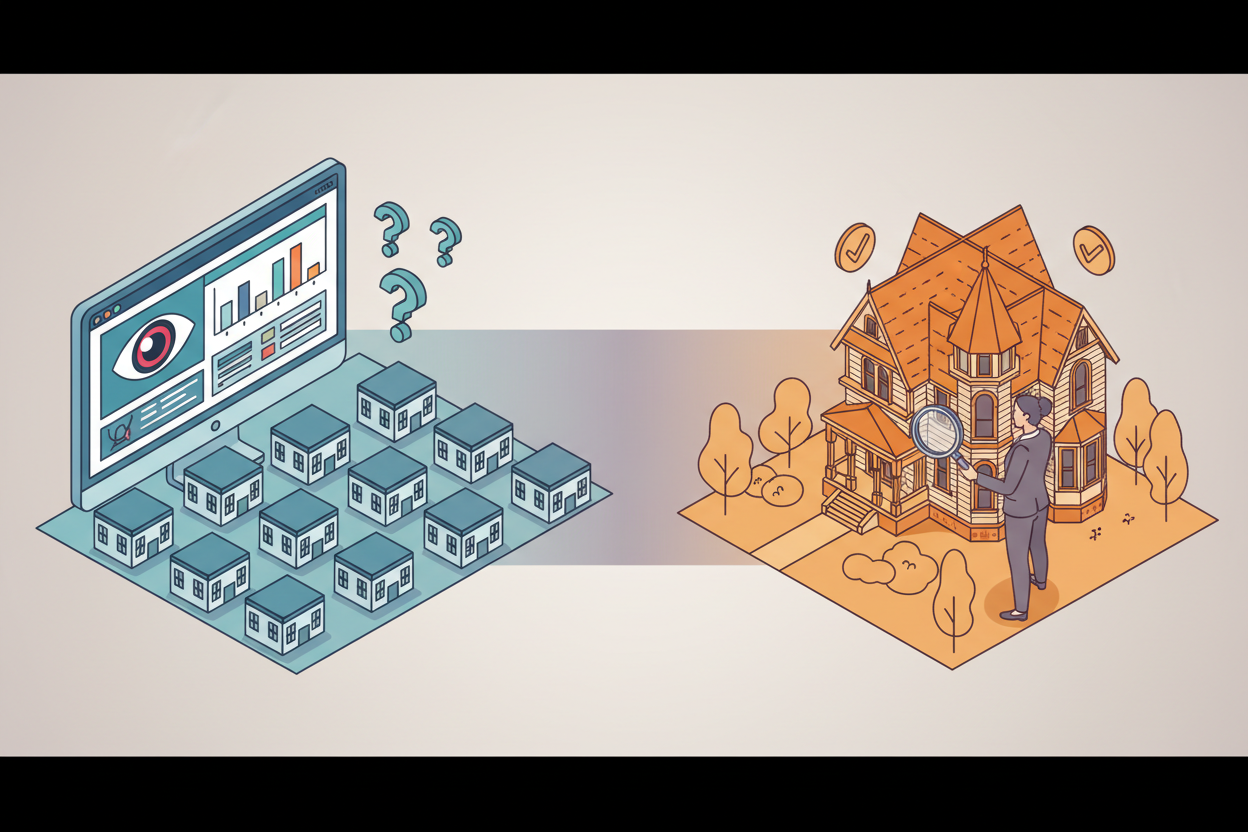
Modern property valuation increasingly relies on technology tools that weren’t available to previous generations of investors. Automated valuation models, geographic information systems, and big data analytics now play crucial roles in sophisticated property analysis.
Machine learning algorithms can process vast amounts of market data to identify patterns and relationships that human analysts might miss. These tools excel at analyzing complex datasets that include everything from school ratings and crime statistics to traffic patterns and environmental factors.
Geospatial analysis using GIS technology allows investors to visualize market trends and identify micro-market opportunities. Heat mapping techniques can reveal price gradients and help identify areas where values might be artificially suppressed or inflated relative to surrounding neighborhoods.
Predictive analytics tools combine historical data with current market indicators to forecast future property values. While these models aren’t perfect, they provide valuable insights that can inform investment timing and strategy decisions.
Risk Assessment and Sensitivity Analysis
Advanced property valuation isn’t complete without comprehensive risk assessment. Professional investors use sensitivity analysis to understand how changes in key variables might impact property values and investment returns.
This process involves creating multiple scenarios based on different assumptions about interest rates, vacancy rates, rental growth, and operating expenses. By understanding how sensitive their investment returns are to these variables, investors can make more informed decisions about risk tolerance and portfolio allocation.
Monte Carlo simulations take this analysis even further by running thousands of scenarios with randomly varying inputs. This technique helps investors understand the full range of potential outcomes and the probability of achieving specific return targets.
Integration and Practical Application
The real power of advanced valuation techniques comes from integrating multiple approaches and cross-checking results. Professional investors rarely rely on a single valuation method; instead, they use multiple techniques to triangulate property values and identify potential discrepancies.
When different valuation methods produce significantly different results, it often indicates either a unique opportunity or a hidden problem that requires further investigation. These discrepancies frequently point toward the most profitable investment opportunities in the market.
Successful implementation also requires understanding the limitations of each technique and knowing when specific methods are most appropriate. Market conditions, property types, and investment objectives all influence which valuation approaches will provide the most reliable results.
Advanced property valuation is both an art and a science. While these sophisticated techniques provide powerful analytical frameworks, they must be combined with market experience, local knowledge, and sound judgment. The investors who master these advanced approaches while maintaining practical perspective are the ones who consistently identify the best opportunities in any market condition.
Remember, the goal isn’t to use every technique on every property, but to develop a comprehensive toolkit that allows you to analyze different situations with appropriate depth and accuracy. As markets continue to evolve, these advanced valuation skills will become increasingly important for maintaining competitive advantage in real estate investing.
Frequently Asked Questions
What’s the most important advanced valuation technique for beginner investors to learn first?
Start with advanced comparable sales analysis using statistical methods. This builds on knowledge most investors already have while introducing more sophisticated analytical thinking. Master weighted scoring systems and regression analysis before moving to more complex techniques like discounted cash flow modeling.
How accurate are automated valuation models compared to professional appraisals?
Automated valuation models work well for typical properties in active markets but struggle with unique properties or thin markets. They’re excellent screening tools but shouldn’t replace human judgment for final investment decisions. Use them to identify properties worth deeper analysis rather than as final arbiters of value.
Which valuation approach works best in rapidly changing markets?
In volatile markets, focus on income-based approaches with sensitivity analysis. These methods help you understand how changing market conditions might impact property performance. Comparable sales become less reliable when market conditions are shifting rapidly, making forward-looking income analysis more valuable.
How often should I update my property valuations?
For active investment decisions, quarterly updates work well for most markets. However, monitor key indicators monthly and be prepared to update valuations immediately when significant market events occur. Properties you’re actively considering for purchase should have current valuations based on the most recent data available.
What’s the biggest mistake investors make with advanced valuation techniques?
Over-relying on models without understanding their limitations. Advanced techniques are tools that enhance judgment, not replace it. The biggest mistake is treating model outputs as absolute truth rather than informed estimates that require interpretation within broader market context.
Free Stuff!
Add CTA sections description.