


Mezzanine Financing: A Deep Dive into Its Advantages
When you’re running a growing business, finding the right type of funding can feel like navigating a maze. You’ve probably heard of traditional bank loans and equity financing, but there’s another option sitting right between them that might be exactly what your company needs: mezzanine financing. This hybrid form of funding has been quietly helping businesses bridge the gap between debt and equity for decades, offering unique advantages that neither traditional loans nor pure equity investments can match.
Think of mezzanine financing as the Swiss Army knife of business funding. It’s versatile, sophisticated, and designed to solve specific problems that arise when companies are ready to take their next big leap. Whether you’re planning an expansion, considering an acquisition, or preparing for an eventual exit strategy, understanding mezzanine financing could open doors you didn’t even know existed.
Understanding Mezzanine Financing: The Basics
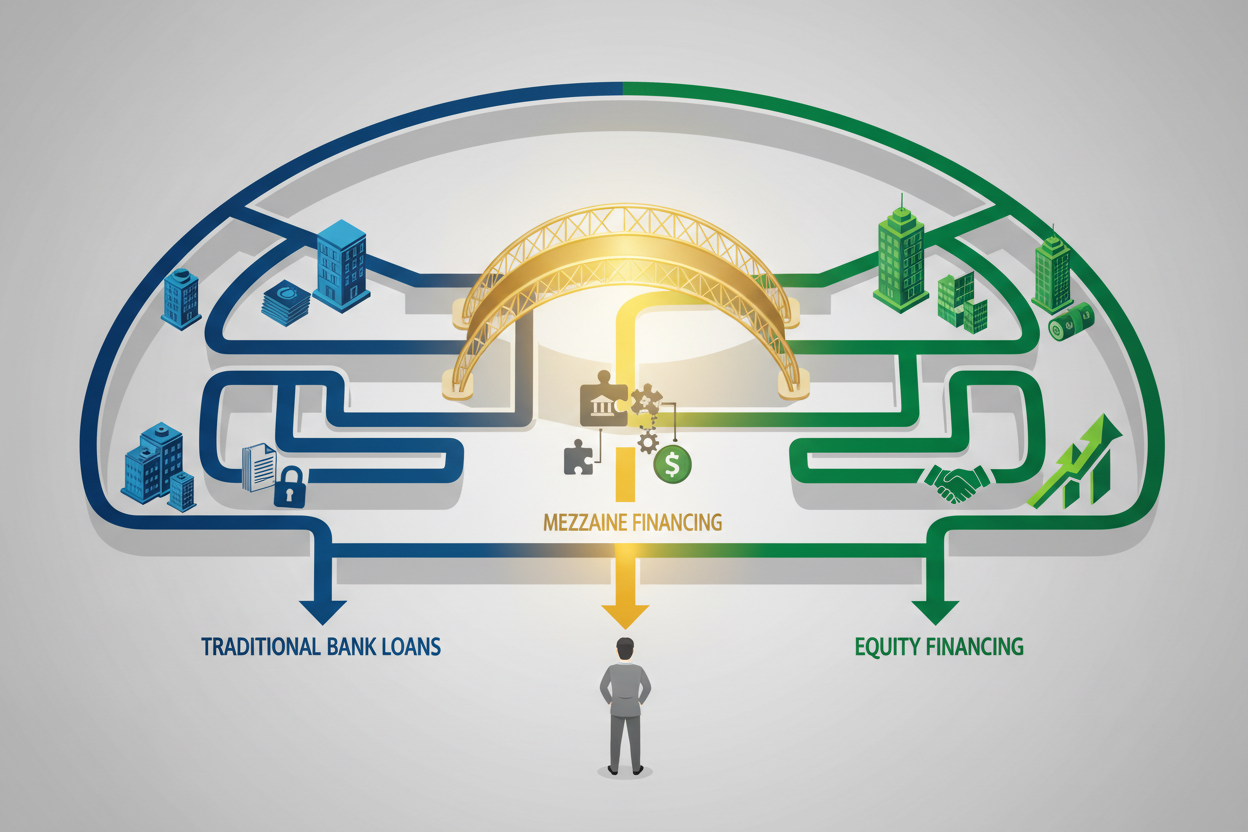
Before we dive into the advantages, let’s establish what mezzanine financing actually is. Picture a building where the ground floor represents debt financing and the top floor represents equity financing. Mezzanine financing occupies that middle level – the mezzanine floor, if you will – combining elements of both debt and equity.
This financing structure typically involves a loan that carries a higher interest rate than traditional debt but also includes equity features like warrants or conversion options. Essentially, lenders accept higher risk in exchange for the potential of higher returns through equity participation. It’s a win-win arrangement when structured properly, giving companies access to capital while providing investors with attractive return potential.
Most mezzanine deals range from $2 million to $50 million, though larger transactions certainly occur. The funds are often used for growth initiatives, acquisitions, management buyouts, or recapitalizations. What makes this financing particularly appealing is its flexibility – both in structure and application.

Lower Cost of Capital Compared to Pure Equity
One of the most compelling advantages of mezzanine financing is its cost-effectiveness compared to giving up straight equity in your business. When you sell equity to investors, you’re essentially selling pieces of your company’s future profits and control. With mezzanine financing, you’re borrowing money with the option for lenders to participate in equity upside, but you’re not immediately diluting your ownership.
Consider this scenario: Your company is valued at $20 million, and you need $5 million for expansion. If you sell equity, you might give up 25% or more of your company. With mezzanine financing, you could secure the same $5 million while potentially giving up only 10-15% equity equivalent through warrants or conversion features. The difference in long-term cost can be substantial, especially if your company experiences significant growth.
The interest payments on mezzanine debt are also typically tax-deductible, unlike dividend payments on equity. This tax advantage can significantly reduce the effective cost of capital, making mezzanine financing an even more attractive option for many businesses.
Flexibility in Structure and Terms
Traditional bank loans come with rigid terms and conditions that can feel like wearing a straitjacket. Mezzanine financing, on the other hand, offers remarkable flexibility in structuring deals to meet specific business needs. This isn’t a one-size-fits-all solution – it’s more like having a tailor create a custom suit for your company’s unique situation.
Payment terms can be structured in various ways. Some mezzanine deals feature payment-in-kind (PIK) interest, where interest payments are added to the principal balance rather than paid in cash. This can be incredibly valuable for growing companies that need to preserve cash flow for operations and expansion. Other structures might include interest-only payments for a certain period, followed by principal and interest payments later.
The equity component can also be customized. Some deals include warrants that allow lenders to purchase equity at predetermined prices, while others might have conversion features that turn debt into equity under specific circumstances. This flexibility allows companies to maintain control while giving lenders appropriate upside participation.
Maintaining Management Control
Perhaps one of the most significant advantages of mezzanine financing is that it allows management teams to maintain operational control of their businesses. Unlike equity investors who often demand board seats and significant input into business decisions, mezzanine lenders typically take a more hands-off approach to day-to-day operations.
This doesn’t mean mezzanine lenders are completely passive. They’ll usually require regular financial reporting and may include certain covenants in their agreements. However, these requirements are generally less intrusive than what you’d experience with private equity investors or venture capitalists who want active roles in shaping company strategy.
For entrepreneurs and management teams who have built their companies from the ground up, maintaining control can be worth its weight in gold. You get to keep running your business the way you see fit while accessing the capital needed to fuel growth. It’s the best of both worlds – funding without micromanagement.
Bridging the Gap for Growth Companies
Many successful companies find themselves in a peculiar position: they’re too large for traditional bank financing but not quite ready for institutional equity investment. This is where mezzanine financing truly shines, filling a critical gap in the capital markets.
Banks typically become uncomfortable lending large amounts to companies that don’t have substantial tangible assets to secure the loan. Meanwhile, private equity firms often look for larger, more mature companies with predictable cash flows. Growing companies with strong fundamentals but limited collateral can find themselves stuck in the middle, unable to access the capital they need to reach the next level.
Mezzanine financing bridges this gap perfectly. Lenders in this space are comfortable evaluating companies based on cash flow, growth potential, and management quality rather than just asset values. They understand that growing companies need capital to invest in inventory, equipment, and talent – investments that might not show immediate returns but are crucial for long-term success.
Enhanced Returns for Lenders and Benefits for Borrowers
The beauty of mezzanine financing lies in its alignment of interests between lenders and borrowers. Lenders receive higher returns than traditional debt instruments, while borrowers get access to capital at rates typically lower than pure equity financing. This mutual benefit creates a foundation for successful partnerships.
For lenders, mezzanine deals offer the stability of debt payments combined with equity upside potential. If a company performs well, lenders can participate in that success through warrants or conversion features. If the company struggles, they still have debt holder priority over equity investors in liquidation scenarios.
Borrowers benefit from this arrangement because mezzanine lenders are incentivized to see the company succeed. Unlike traditional lenders who only care about getting their principal and interest back, mezzanine lenders have skin in the game when it comes to company growth. This often translates into more patient capital and lenders who are willing to work through temporary challenges rather than immediately calling loans.
Strategic Uses of Mezzanine Capital
The versatility of mezzanine financing makes it suitable for various strategic initiatives. One of the most common uses is funding expansion into new markets or product lines. Unlike bank loans that might require specific collateral tied to the investment, mezzanine financing can fund intangible investments like market research, brand development, and team building.
Acquisitions represent another prime use case for mezzanine capital. When companies identify strategic acquisition opportunities, they often need to move quickly. Mezzanine financing can provide the necessary capital to complete deals without going through lengthy bank approval processes or diluting ownership through equity raises.
Management buyouts also frequently utilize mezzanine financing. When management teams want to buy out existing owners or investors, mezzanine capital can provide the necessary funding while allowing management to maintain control and significant ownership stakes. This creates powerful incentives for management to drive company performance.
Risk Considerations and Mitigation
While mezzanine financing offers numerous advantages, it’s important to understand the associated risks and how to mitigate them. The higher cost compared to traditional debt is the most obvious consideration. Mezzanine rates typically range from 12% to 20% annually, plus the potential equity component.
However, this higher cost often reflects the increased flexibility and reduced collateral requirements. Companies should evaluate the total cost of capital, including the opportunity cost of giving up equity, rather than focusing solely on interest rates. In many cases, the premium paid for mezzanine financing is justified by the strategic advantages it provides.
Another consideration is the complexity of mezzanine structures. These deals often involve sophisticated legal documentation and financial arrangements that require experienced advisors to navigate properly. Companies should budget for quality legal and financial advice to ensure they fully understand their obligations and rights.
Frequently Asked Questions
What types of companies are best suited for mezzanine financing?
Mezzanine financing works best for profitable, growing companies with strong cash flows and experienced management teams. Companies with revenues typically between $10 million and $100 million often find mezzanine financing most appropriate, though deals can be structured for smaller or larger businesses depending on circumstances.
How long does it typically take to secure mezzanine financing?
The process usually takes 8-16 weeks from initial contact to funding, depending on the complexity of the deal and the preparedness of the company. This is generally faster than private equity transactions but longer than traditional bank loans.
Can mezzanine financing be refinanced or paid off early?
Most mezzanine agreements include prepayment options, though they may come with penalties or call protection periods. Companies should negotiate these terms upfront to maintain flexibility for future refinancing opportunities.
What documentation is required for mezzanine financing applications?
Lenders typically require three years of audited financial statements, detailed business plans, management presentations, and comprehensive due diligence materials. The documentation requirements are more extensive than traditional loans but less burdensome than equity fundraising.
How does mezzanine financing affect a company’s credit profile?
Mezzanine debt appears on the balance sheet but is often treated as quasi-equity by rating agencies and traditional lenders due to its subordinated nature and equity features. This can actually improve a company’s ability to secure additional senior debt financing.
Mezzanine financing represents a sophisticated financial tool that can unlock significant value for growing companies. Its unique combination of debt and equity features creates opportunities for businesses to access capital while maintaining control and minimizing dilution. For companies that fit the right profile, mezzanine financing isn’t just an alternative funding source – it’s often the optimal solution for achieving strategic objectives while preserving long-term value creation potential.
Free Stuff!
Add CTA sections description.