


Innovative Approaches to Equity Placement in Real Estate: Transforming Investment Strategies
The real estate investment landscape is experiencing a revolutionary transformation. Gone are the days when equity placement relied solely on traditional methods of securing capital through banks or wealthy individual investors. Today’s market demands fresh thinking, creative solutions, and innovative approaches that can unlock new sources of funding while providing better returns for all stakeholders involved.
As property values continue to rise and investment opportunities become more competitive, developers, investors, and real estate professionals are turning to groundbreaking strategies that reshape how equity is sourced, structured, and deployed. These innovative approaches aren’t just changing the game – they’re rewriting the rulebook entirely.

The Evolution of Real Estate Equity Placement
Real estate equity placement has traditionally followed a predictable pattern. Developers would approach banks, private equity firms, or high-net-worth individuals with business plans, hoping to secure the necessary capital for their projects. While this approach worked for decades, it often created bottlenecks, limited access to capital, and concentrated risk among a small group of investors.
The modern real estate market operates at a much faster pace, with opportunities appearing and disappearing within weeks rather than months. This acceleration has created a pressing need for more agile, flexible, and accessible equity placement strategies that can match the speed of today’s market dynamics.
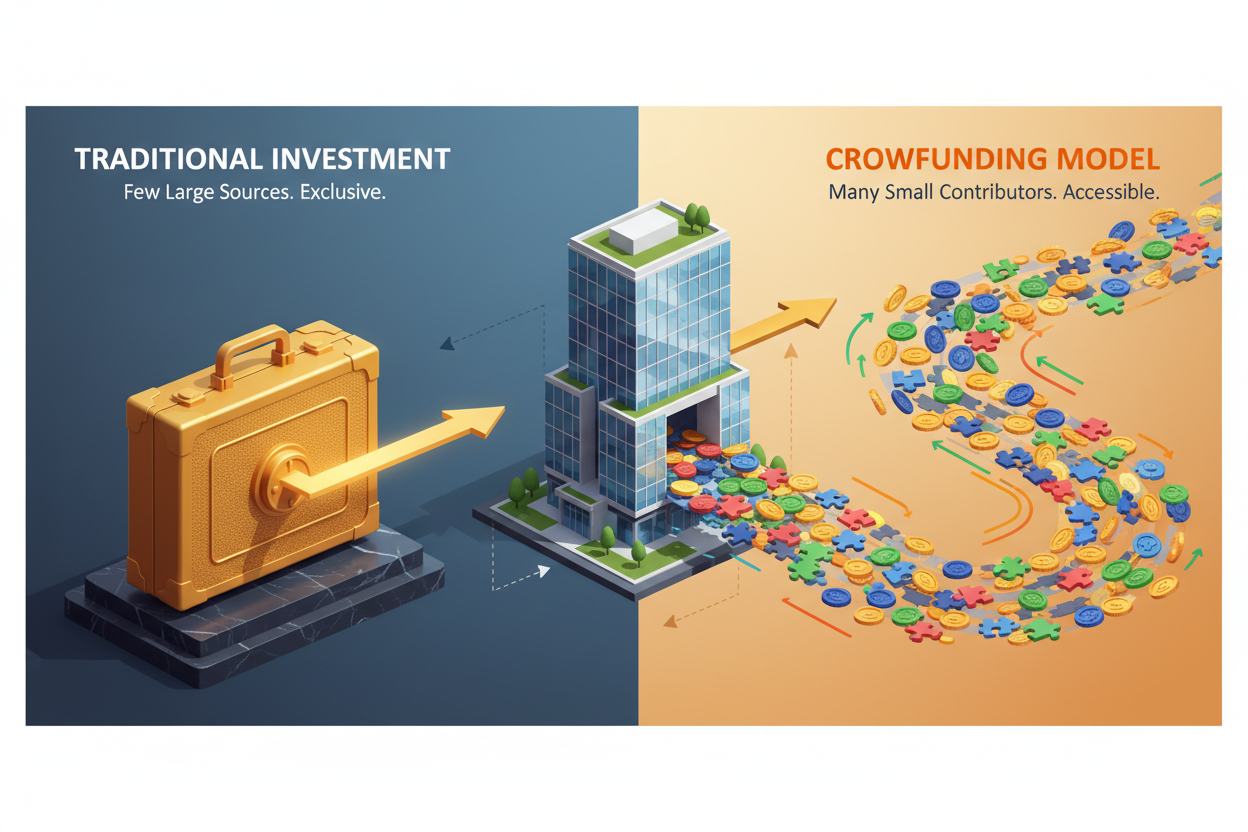
What’s particularly exciting about current developments is how technology and changing investor preferences are converging to create entirely new possibilities. From crowdfunding platforms to blockchain-based tokenization, the tools available today would have seemed like science fiction just a decade ago.
Crowdfunding Platforms: Democratizing Real Estate Investment
Perhaps no innovation has been more transformative than the rise of real estate crowdfunding platforms. These digital marketplaces have fundamentally altered who can participate in real estate investments and how projects get funded.
Platforms like Fundrise, RealtyMogul, and YieldStreet have opened doors for everyday investors to participate in deals that were previously exclusive to institutional players. Instead of needing millions of dollars to invest in a commercial property, individuals can now contribute as little as $500 to $1,000 and own a fractional share of high-quality real estate assets.
From the developer’s perspective, crowdfunding offers access to a much broader pool of potential investors. Rather than convincing one or two large investors to fund an entire project, developers can now appeal to hundreds or thousands of smaller investors who collectively provide the necessary capital. This approach often leads to faster funding cycles and reduced dependence on traditional financing sources.
The success stories are compelling. Projects that might have struggled to find traditional funding have raised millions through crowdfunding platforms, often exceeding their initial targets. This democratization of real estate investment has created a win-win scenario where developers get the capital they need while individual investors gain access to previously unavailable opportunities.
Blockchain Technology and Real Estate Tokenization
Blockchain technology is pushing the boundaries of what’s possible in real estate equity placement even further. Through tokenization, real property can be divided into digital tokens that represent fractional ownership, creating unprecedented liquidity and accessibility in real estate investments.
Real estate tokenization works by creating digital representations of property ownership on a blockchain. These tokens can be bought, sold, and traded much like stocks, but they represent actual real estate assets. This innovation addresses one of real estate’s biggest challenges: liquidity. Traditional real estate investments often require long holding periods and complex exit strategies, but tokenized properties can potentially be sold in minutes rather than months.
Several pioneering companies are already implementing tokenization successfully. For instance, luxury properties in major cities have been tokenized, allowing investors worldwide to own fractions of prime real estate without the typical barriers of international property investment. The transparency and security provided by blockchain technology give investors confidence while reducing transaction costs and eliminating many traditional intermediaries.
Smart contracts, another blockchain innovation, are automating many aspects of real estate transactions. These self-executing contracts can automatically distribute rental income to token holders, manage property expenses, and even facilitate automatic reinvestment strategies. This level of automation reduces administrative costs and ensures more efficient capital deployment.
Strategic Partnerships and Joint Ventures
Innovative equity placement isn’t always about new technology – sometimes it’s about reimagining traditional relationships. Strategic partnerships and creative joint venture structures are becoming increasingly sophisticated, allowing parties to combine resources in ways that maximize everyone’s strengths while minimizing individual risk exposure.
One particularly effective approach involves partnerships between developers and institutional investors like pension funds or insurance companies. These institutions have substantial capital but often lack the expertise or desire to manage real estate projects directly. By partnering with experienced developers, they can gain exposure to real estate returns while the developers access patient capital with favorable terms.
Cross-industry partnerships are also emerging as powerful equity placement strategies. Technology companies looking to diversify their investments are partnering with real estate developers, bringing both capital and technological expertise to projects. These partnerships often result in more innovative, tech-forward developments that command premium valuations.
International partnerships represent another frontier in innovative equity placement. Developers in emerging markets are partnering with investors from developed economies, creating opportunities for capital to flow to high-growth regions while providing investors with exposure to potentially higher returns. These arrangements often include knowledge transfer components that benefit all parties involved.
Alternative Investment Structures
The structure of real estate investments themselves is evolving to attract different types of capital and meet diverse investor needs. Revenue-sharing agreements, profit participation models, and hybrid debt-equity structures are becoming more common and sophisticated.
Revenue-sharing models allow investors to participate in a property’s ongoing income stream without traditional ownership structures. This approach can be particularly attractive for income-focused investors who want steady returns without the complexities of property management. Developers benefit by accessing capital without giving up as much control or equity in their projects.
Convertible instruments are another innovation gaining traction. These investments start as debt but can convert to equity under certain conditions, such as when a property reaches specific performance milestones or when market conditions become favorable. This structure provides downside protection for investors while allowing them to participate in upside potential.
Preferred equity structures are being redesigned to offer more flexibility and better align interests between different classes of investors. These might include step-up provisions that increase returns based on performance, or structures that provide different investors with different types of returns based on their risk preferences and investment horizons.
Technology-Driven Due Diligence and Risk Assessment
Innovative equity placement isn’t just about finding new sources of capital – it’s also about making the investment process more efficient and transparent. Advanced analytics, artificial intelligence, and big data are revolutionizing how real estate investments are evaluated and structured.
Predictive analytics tools can now assess market trends, demographic shifts, and economic indicators to provide more accurate projections of property performance. This enhanced due diligence capability makes investors more comfortable with their decisions and allows for more precise risk pricing.
Virtual and augmented reality technologies are transforming how investors evaluate properties, especially for international or remote investments. Investors can now take detailed virtual tours of properties and surrounding areas, making informed decisions without the time and expense of physical site visits.
Automated valuation models and real-time market data integration provide more dynamic and accurate property valuations. This transparency helps build investor confidence and enables more efficient price discovery in equity placement processes.
Regulatory Considerations and Compliance Innovation
As innovative equity placement methods evolve, so too must the regulatory frameworks that govern them. Forward-thinking jurisdictions are creating regulatory sandboxes and updated compliance structures that accommodate new investment models while protecting investor interests.
The SEC’s Regulation Crowdfunding and Regulation A+ have already opened new possibilities for real estate equity placement in the United States. These regulations provide clearer pathways for companies to raise capital from non-accredited investors while maintaining appropriate investor protections.
Compliance technology is also evolving to meet the needs of innovative equity placement strategies. Automated know-your-customer (KYC) and anti-money laundering (AML) systems make it easier and more cost-effective to onboard large numbers of smaller investors. Blockchain-based identity verification and smart contract compliance monitoring are reducing the administrative burden of regulatory compliance.
International regulatory harmonization efforts are making cross-border equity placement more feasible. As different jurisdictions develop compatible frameworks for innovative investment structures, it becomes easier to create truly global real estate investment opportunities.
Future Trends and Emerging Opportunities
Looking ahead, several trends are likely to further transform real estate equity placement. Environmental, social, and governance (ESG) considerations are becoming increasingly important to investors, creating opportunities for projects that can demonstrate positive environmental and social impacts.
Artificial intelligence and machine learning will continue to enhance investment decision-making and risk assessment. These technologies may eventually enable fully automated investment platforms that can match investors with opportunities based on sophisticated algorithms and personal preferences.
The integration of Internet of Things (IoT) devices in properties will provide real-time performance data that could enable new types of performance-based investment structures. Imagine equity arrangements where returns are directly tied to measurable building performance metrics like energy efficiency or tenant satisfaction scores.
Decentralized finance (DeFi) protocols may eventually enable completely peer-to-peer real estate transactions without traditional financial intermediaries. While still in early stages, these developments could dramatically reduce transaction costs and increase accessibility to real estate investments.
Conclusion
The landscape of real estate equity placement is undergoing a fundamental transformation driven by technology, changing investor preferences, and innovative thinking. From crowdfunding platforms that democratize access to blockchain tokenization that creates new forms of liquidity, these innovations are making real estate investment more accessible, efficient, and transparent than ever before.
Success in this evolving environment requires staying informed about emerging trends, understanding new technologies, and being willing to adapt traditional approaches. Whether you’re a developer seeking capital, an investor looking for opportunities, or a professional serving this market, embracing these innovative approaches to equity placement will be essential for thriving in the future of real estate investment.
The most exciting aspect of these developments is that we’re likely still in the early stages of this transformation. As technology continues to advance and regulatory frameworks evolve, we can expect even more innovative approaches to emerge, further expanding the possibilities for real estate equity placement and investment.
Frequently Asked Questions
What is real estate equity placement?
Real estate equity placement refers to the process of securing investment capital for real estate projects by selling ownership stakes to investors. This can involve traditional methods like bank loans or private investors, as well as innovative approaches like crowdfunding and tokenization.
How does real estate crowdfunding work?
Real estate crowdfunding allows multiple investors to pool their money together to fund real estate projects through online platforms. Investors can contribute smaller amounts (often starting at $500-$1,000) to own fractional shares of properties that would otherwise require much larger individual investments.
What are the benefits of tokenized real estate?
Tokenized real estate offers several advantages including increased liquidity (tokens can be traded more easily than traditional property), lower barriers to entry, global accessibility, transparent transactions through blockchain technology, and automated processes through smart contracts.
Are innovative real estate investments regulated?
Yes, innovative real estate investments are subject to securities regulations. In the US, regulations like Crowdfunding Regulation and Regulation A+ provide frameworks for these investments. However, regulations vary by jurisdiction and continue to evolve as new investment methods emerge.
What should investors consider before participating in innovative real estate equity placement?
Investors should consider factors such as the platform’s credibility, the specific project’s risks and returns, regulatory compliance, liquidity options, fees and costs, their own risk tolerance, and the diversification of their overall investment portfolio.
How do traditional real estate investors benefit from these innovations?
Traditional investors benefit through access to a broader range of investment opportunities, more efficient due diligence processes, better transparency, lower transaction costs, and new ways to structure investments that better match their risk and return preferences.
Free Stuff!
Add CTA sections description.