



Bridge Loans: A Vital Resource for Property Purchases
Picture this: you’ve found your dream home, but there’s just one problem – you haven’t sold your current property yet. The seller wants a quick closing, and traditional financing feels impossibly slow. This scenario plays out thousands of times across the real estate market, leaving buyers frustrated and potentially missing out on perfect opportunities. Enter bridge loans – the financial tool that’s become a game-changer for property purchases in today’s competitive market.
Bridge loans, also known as interim financing or swing loans, serve as temporary financial solutions that “bridge” the gap between buying a new property and selling an existing one. These short-term loans have evolved from a niche financial product into an essential resource for savvy property investors, homebuyers, and real estate professionals who understand the value of timing in property transactions.
Understanding Bridge Loans: The Basics You Need to Know
A bridge loan is essentially a short-term financing option secured by your current property, providing immediate capital to purchase a new one. Unlike traditional mortgages that can take 30-45 days to close, bridge loans can often be arranged within days or weeks, making them invaluable in fast-moving real estate markets.
These loans typically last anywhere from six months to three years, though most borrowers use them for much shorter periods. The interest rates are generally higher than conventional mortgages – usually ranging from 6% to 12% – but this premium pays for the speed and flexibility that bridge loans provide.
What makes bridge loans particularly attractive is their asset-based nature. Lenders focus primarily on the value of your existing property rather than getting bogged down in extensive income verification processes that slow down traditional lending. This approach means faster approvals and quicker access to funds when timing is everything.
When Bridge Loans Become Your Best Financial Strategy
The decision to use bridge financing isn’t one-size-fits-all, but certain scenarios make these loans particularly valuable. Real estate investors often rely on bridge loans when they spot time-sensitive opportunities – perhaps a distressed property that needs immediate attention or a foreclosure auction where cash talks louder than financing contingencies.
Homeowners upgrading to larger properties frequently find themselves in timing predicaments. Your new home’s closing date might not align perfectly with your current home’s sale, especially in markets where inventory moves slowly. Bridge loans eliminate the stress of coordinating these timelines, allowing you to secure your new property without the pressure of a rushed sale.
Commercial property investors particularly appreciate bridge loans for their flexibility in renovation projects. Traditional lenders often shy away from properties requiring significant improvements, but bridge lenders understand that renovation adds value. This makes bridge financing ideal for fix-and-flip projects or commercial property improvements that will increase rental income.
The Bridge Loan Application Process: What to Expect
Applying for a bridge loan differs significantly from traditional mortgage applications, and understanding this process can save you valuable time. Most bridge lenders start with a simple application that focuses on your property’s current value, existing mortgage balance, and the purchase price of your new property.
The underwriting process moves much faster because bridge lenders rely heavily on property appraisals rather than extensive income documentation. While you’ll still need to provide financial information, the requirements are typically less stringent than conventional loans. Many borrowers are pleasantly surprised by how streamlined the process feels compared to traditional mortgage applications.
Documentation requirements usually include recent property appraisals, proof of homeowner’s insurance, and basic financial statements. Some lenders may request tax returns or bank statements, but the overall paperwork burden is considerably lighter than traditional financing. This efficiency allows experienced bridge lenders to provide approval decisions within days rather than weeks.
Weighing the Costs: Bridge Loan Fees and Interest Rates
Understanding bridge loan costs helps you make informed decisions about when this financing makes financial sense. Interest rates typically run higher than traditional mortgages, reflecting the increased risk and shorter-term nature of these loans. However, smart borrowers focus on the total cost of the loan rather than just the interest rate.
Most bridge loans include origination fees ranging from 1% to 3% of the loan amount, plus additional costs for appraisals, title insurance, and legal fees. While these costs might seem substantial, consider them against the potential benefits: securing a better property, avoiding temporary housing costs, or capitalizing on time-sensitive investment opportunities.
The key to managing bridge loan costs effectively lies in having a realistic timeline for repayment. Most borrowers plan to repay bridge loans within six to twelve months, either through the sale of their existing property or by refinancing into traditional long-term financing. Having a clear exit strategy helps ensure that the short-term costs don’t become long-term financial burdens.
Bridge Loans vs. Traditional Financing: Making the Right Choice
Choosing between bridge loans and traditional financing requires careful consideration of your specific situation, timeline, and financial goals. Traditional mortgages offer lower interest rates and longer repayment terms, making them ideal when you have time to navigate the standard lending process.
However, bridge loans shine when speed and flexibility matter more than minimizing interest costs. In competitive real estate markets, the ability to make non-contingent offers can mean the difference between securing your target property and losing it to cash buyers. Bridge loans essentially give you the purchasing power of a cash buyer while maintaining your existing property until market conditions favor its sale.
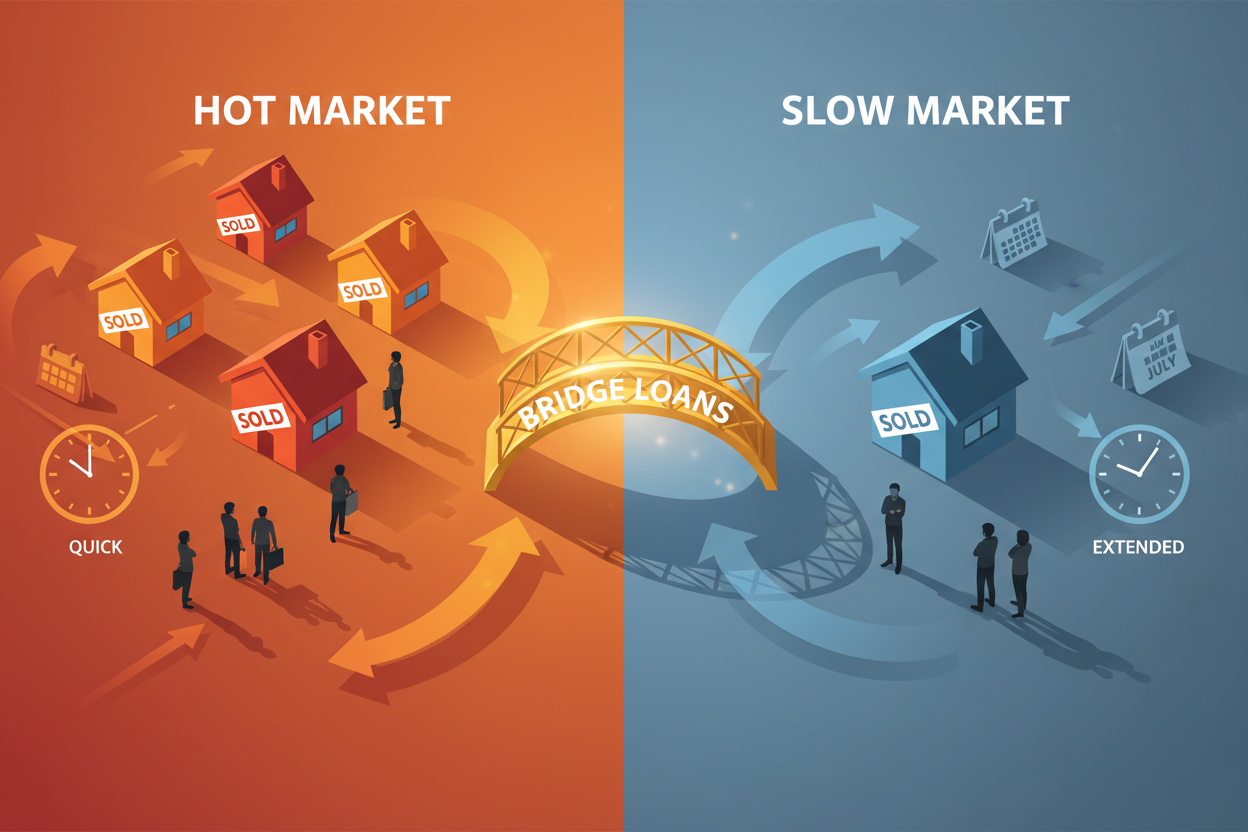
Consider your local market conditions when making this decision. In hot real estate markets where properties sell quickly, traditional financing might work fine. But in slower markets, or when dealing with unique properties that require longer marketing periods, bridge loans provide the flexibility to buy first and sell later without rushing into unfavorable sale conditions.
Maximizing Success with Bridge Loan Strategies
Successful bridge loan users typically follow several key strategies that maximize benefits while minimizing risks. First, they maintain realistic timelines for selling their existing property, often working with experienced real estate agents who understand the urgency involved in bridge loan situations.
Smart borrowers also prepare their existing property for sale before or immediately after securing bridge financing. This might mean completing minor repairs, staging the home, or pricing it competitively to ensure a quick sale. The goal is to minimize the time you’re carrying two mortgage payments.
Having backup plans proves crucial for bridge loan success. This might include the ability to refinance the bridge loan into longer-term financing if your property sale takes longer than expected, or having sufficient cash reserves to handle extended carrying costs. Experienced bridge loan users never put themselves in positions where they’re completely dependent on a quick property sale.
Common Bridge Loan Mistakes to Avoid
Even experienced property buyers can stumble when using bridge loans, often due to overconfidence or inadequate planning. One common mistake involves overestimating how quickly properties will sell, particularly in changing market conditions. What seems like a hot market when you secure bridge financing might cool down by the time you list your property.
Another frequent error is failing to account for all carrying costs during the bridge period. Beyond the bridge loan payments, you’ll have property taxes, insurance, utilities, and maintenance costs for both properties. These expenses add up quickly and can strain budgets if not properly planned for.
Perhaps the most dangerous mistake is using bridge loans without having adequate financial reserves. Bridge financing should supplement your financial strength, not stretch it to the breaking point. Responsible borrowers maintain emergency funds that could cover several months of payments on both properties if needed.
The Future of Bridge Lending in Real Estate
Bridge lending continues evolving as real estate markets become more sophisticated and competitive. Technology improvements are making the application and approval process even faster, with some lenders now offering preliminary approvals within hours rather than days.
The growing acceptance of bridge loans among real estate professionals has also improved the overall experience for borrowers. Real estate agents increasingly understand how bridge financing works, making them better able to structure deals that accommodate this type of financing. This professional familiarity reduces friction in transactions and helps ensure smoother closings.
As real estate markets remain competitive and inventory stays tight in many areas, bridge loans will likely become even more important for buyers who want to compete effectively. The ability to act quickly and make strong offers without financing contingencies provides significant advantages in multiple-offer situations.
Frequently Asked Questions
How quickly can I get approved for a bridge loan?
Most bridge lenders can provide approval within 5-10 business days, with some offering preliminary approvals within 24-48 hours. The speed depends on having proper documentation ready and working with experienced bridge loan specialists.
What happens if my current property doesn’t sell during the bridge loan term?
Most bridge loans offer extension options, though these typically come with additional fees. Alternatively, many borrowers refinance into traditional long-term financing if their property sale takes longer than expected.
Do I need perfect credit to qualify for a bridge loan?
Bridge lenders typically accept lower credit scores than traditional mortgage lenders because they focus primarily on property value and equity. Most require credit scores of 620 or higher, though some specialized lenders work with lower scores.
Can I use a bridge loan for investment properties?
Yes, bridge loans are commonly used for investment property purchases, particularly for fix-and-flip projects or rental property acquisitions where speed matters more than minimizing interest costs.
What’s the maximum loan-to-value ratio for bridge loans?
Most bridge lenders offer up to 75-80% of your current property’s value, though some may go higher for borrowers with strong financial profiles or valuable properties.
Are bridge loan interest payments tax-deductible?
Interest on bridge loans used for investment properties is typically tax-deductible as a business expense. For primary residences, consult with a tax professional about current deductibility rules, as tax laws change frequently.
Bridge loans represent more than just another financing option – they’re strategic tools that can make the difference between missing opportunities and capitalizing on them. Whether you’re a first-time homebuyer navigating a competitive market, an investor seeking to expand your portfolio, or someone simply trying to coordinate the timing of selling one home and buying another, bridge loans offer solutions that traditional financing cannot match. The key lies in understanding when and how to use them effectively, always keeping in mind that successful bridge financing requires careful planning, realistic timelines, and adequate financial reserves to ensure a smooth transition from temporary to permanent financing solutions.
Free Stuff!
Add CTA sections description.