



The Complete Guide to Underwriting Commercial Properties
Commercial property underwriting can feel like navigating through a maze blindfolded. Whether you’re a seasoned investor looking to expand your portfolio or a newcomer trying to understand the ins and outs of commercial real estate financing, mastering the underwriting process is absolutely crucial for your success.
Think of underwriting as the financial detective work that determines whether a commercial property investment makes sense. It’s the process that lenders, investors, and property owners use to evaluate risk, assess profitability, and make informed decisions about financing or purchasing commercial real estate.

In this comprehensive guide, we’ll walk you through everything you need to know about commercial property underwriting, from the basic fundamentals to advanced strategies that can help you make smarter investment decisions.
What is Commercial Property Underwriting?
Commercial property underwriting is the systematic evaluation process used to assess the financial viability and risk associated with a commercial real estate investment or loan. Unlike residential properties where the focus is primarily on the borrower’s creditworthiness, commercial underwriting places heavy emphasis on the property’s ability to generate income and cover its expenses.
The underwriting process involves analyzing multiple factors including property cash flow, market conditions, borrower qualifications, and the overall economic environment. This comprehensive analysis helps lenders determine loan terms, interest rates, and approval decisions, while helping investors evaluate whether a property meets their investment criteria.
Commercial underwriters act as risk assessors, using their expertise to predict future performance based on current data and market trends. Their analysis directly impacts loan approval, terms, and conditions, making their role pivotal in commercial real estate transactions.
Key Components of Commercial Underwriting
Successful commercial property underwriting relies on several critical components that work together to paint a complete picture of the investment opportunity. Understanding these elements will help you prepare better documentation and present stronger deals to lenders or investors.
The property’s financial performance takes center stage in commercial underwriting. This includes analyzing rental income, operating expenses, vacancy rates, and net operating income (NOI). Underwriters scrutinize lease agreements, tenant creditworthiness, and rental market comparisons to assess income stability and growth potential.
Location analysis forms another cornerstone of the underwriting process. Factors such as neighborhood demographics, local economic conditions, transportation accessibility, and future development plans all influence a property’s long-term value and income potential. A prime location can often compensate for other weaknesses in a deal.
Property condition and age significantly impact underwriting decisions. Newer properties typically require less immediate capital expenditure, while older buildings may need substantial renovations or system upgrades. Professional property inspections and engineering reports help underwriters assess potential maintenance costs and capital improvement needs.
Financial Analysis and Metrics
The heart of commercial property underwriting lies in financial analysis, where numbers tell the story of a property’s investment potential. Understanding key financial metrics is essential for anyone involved in commercial real estate transactions.
Net Operating Income (NOI) serves as the foundation for most commercial property valuations. This metric represents the property’s annual income after operating expenses but before debt service and taxes. Calculating NOI accurately requires careful analysis of all income sources and legitimate operating expenses, excluding any owner-specific costs or financing charges.
Debt Service Coverage Ratio (DSCR) measures a property’s ability to cover its debt payments from operating income. Most lenders require a minimum DSCR of 1.20 to 1.25, meaning the property generates 20-25% more income than needed to service the debt. Higher DSCR ratios indicate stronger cash flow and lower risk for lenders.
Capitalization rates (cap rates) help determine property values by comparing NOI to purchase price or market value. Cap rates vary significantly by property type, location, and market conditions. Understanding local cap rate trends helps underwriters assess whether a property is priced appropriately for current market conditions.
Loan-to-Value (LTV) ratios represent the loan amount as a percentage of the property’s appraised value. Commercial lenders typically require LTV ratios between 70-80%, depending on property type and borrower strength. Lower LTV ratios reduce lender risk but require larger down payments from borrowers.
Property Types and Underwriting Considerations
Different commercial property types require specialized underwriting approaches, as each category presents unique risks and opportunities. Understanding these distinctions helps underwriters apply appropriate analysis methods and risk assessments.
Office buildings require careful analysis of lease terms, tenant quality, and market absorption rates. Class A properties in prime locations typically command premium rents but may face higher vacancy risks during economic downturns. Underwriters must evaluate lease expiration schedules, tenant diversification, and local employment trends affecting office demand.
Retail properties depend heavily on location, foot traffic, and consumer spending patterns. Shopping centers and standalone retail buildings face increasing challenges from e-commerce trends, making tenant mix and adaptability crucial factors in underwriting decisions. Anchor tenants and co-tenancy clauses can significantly impact cash flow stability.
Industrial properties, including warehouses and manufacturing facilities, have gained popularity due to e-commerce growth and supply chain demands. Underwriters focus on ceiling heights, loading dock access, proximity to transportation networks, and potential environmental concerns when evaluating industrial assets.
Multifamily properties require analysis of rental market conditions, unit mix, and local housing demand. Factors such as school districts, employment centers, and demographic trends influence rental rates and occupancy levels. Underwriters also consider rent control regulations and tenant turnover costs.
Risk Assessment and Mitigation
Effective commercial property underwriting involves identifying, quantifying, and mitigating various risks that could impact investment performance. Professional underwriters develop sophisticated risk assessment frameworks to evaluate potential challenges and their likelihood of occurrence.
Market risk encompasses factors beyond the property itself, including local economic conditions, industry trends, and competitive pressures. Underwriters analyze employment statistics, population growth, and development pipelines to assess market stability and growth potential. Diversified local economies typically present lower market risk than areas dependent on single industries.
Credit risk focuses on tenant and borrower quality, examining financial statements, payment histories, and business stability. Strong, creditworthy tenants with long-term leases reduce income volatility, while weak tenants increase vacancy and collection risks. Tenant diversification helps mitigate credit risk by reducing dependence on any single income source.
Interest rate risk affects both borrowers and lenders, as rising rates can impact property values and refinancing options. Fixed-rate loans provide payment certainty but may limit flexibility, while variable-rate loans offer potential savings but create payment uncertainty. Underwriters consider interest rate trends and borrower sensitivity when structuring loan terms.
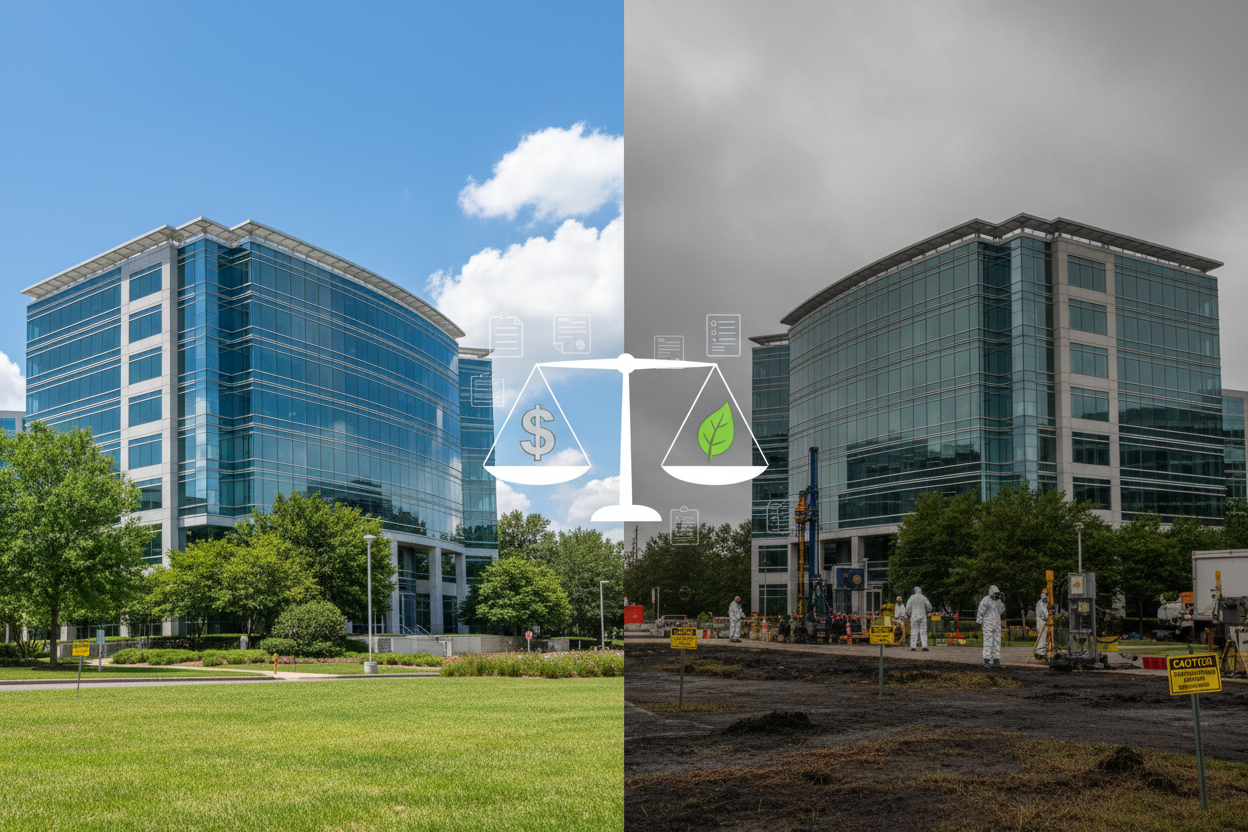
Environmental risks include potential contamination, natural disasters, and regulatory compliance issues. Phase I environmental assessments help identify potential concerns, while flood zone maps and seismic studies reveal natural disaster risks. These factors can significantly impact property values and insurance costs.
Documentation and Due Diligence
Thorough documentation forms the backbone of professional commercial property underwriting. Proper due diligence requires systematic collection and analysis of financial, legal, and physical property information to make informed decisions.
Financial documentation includes recent operating statements, rent rolls, lease agreements, and tax returns. Three years of historical financial data helps identify trends and verify income stability. Current rent rolls should detail lease terms, escalations, and tenant information, while lease agreements reveal specific terms and conditions affecting cash flow.
Legal documentation encompasses title reports, surveys, zoning information, and environmental assessments. Clear title is essential for lender protection, while surveys identify boundary issues and encroachments. Zoning compliance ensures current use is legal and identifies potential expansion or modification opportunities.
Physical property documentation includes recent inspections, appraisals, and capital improvement plans. Professional inspections reveal maintenance needs and system conditions, while appraisals provide independent value opinions. Capital improvement schedules help underwriters project future expenditure requirements and their impact on cash flow.
Market documentation supports assumptions about rental rates, vacancy levels, and absorption trends. Comparable sales and lease data, market studies, and economic reports provide context for underwriting assumptions. This information helps validate projected income and expense levels used in financial analysis.
Common Underwriting Mistakes to Avoid
Even experienced professionals can fall into common underwriting traps that lead to poor investment decisions or loan losses. Understanding these pitfalls helps improve analysis quality and decision-making accuracy.
Overly optimistic projections represent one of the most frequent underwriting errors. Assuming immediate rent increases, minimal vacancy, or below-market expenses can significantly overstate property performance. Conservative assumptions and stress testing help identify potential performance under adverse conditions.
Insufficient market analysis can lead to unrealistic expectations about rental rates, absorption, and competition. Relying on outdated or limited market data may result in projections that don’t reflect current conditions. Thorough market research and professional market studies provide more reliable foundations for underwriting assumptions.
Inadequate due diligence on tenant quality and lease terms can create unexpected income disruptions. Failing to verify tenant financial strength or understand lease provisions may lead to collection problems or unexpected expenses. Comprehensive tenant analysis and lease review help identify potential issues before they impact performance.
Underestimating capital expenditure needs often results in cash flow shortfalls and unexpected expenses. Deferring maintenance or ignoring system replacement schedules can create significant financial burdens. Professional property inspections and reserve studies help identify future capital needs and their timing.
Technology and Tools in Modern Underwriting
Modern commercial property underwriting increasingly relies on sophisticated technology and analytical tools to improve accuracy and efficiency. These innovations help underwriters process more information faster while reducing human error and bias.
Automated valuation models (AVMs) use algorithms and market data to provide rapid property value estimates. While not replacing professional appraisals, AVMs help underwriters quickly assess deal feasibility and identify properties requiring closer scrutiny. Machine learning algorithms continue improving AVM accuracy by incorporating more data sources and market factors.
Financial modeling software enables complex scenario analysis and sensitivity testing. These tools allow underwriters to quickly evaluate different assumptions and market conditions, identifying key variables that most impact investment performance. Sophisticated models can incorporate probabilistic analysis and Monte Carlo simulations for more robust risk assessment.
Market data platforms provide real-time access to comparable sales, lease rates, and market trends. These services aggregate information from multiple sources, enabling more comprehensive market analysis and benchmarking. Integration with underwriting software streamlines the analysis process and improves data accuracy.
Document management systems organize and track due diligence materials throughout the underwriting process. These platforms ensure nothing falls through the cracks while providing audit trails and collaboration tools for underwriting teams. Automated document review and data extraction further improve efficiency and accuracy.
Frequently Asked Questions
What is the typical timeline for commercial property underwriting?
Commercial property underwriting typically takes 30-60 days for standard transactions, though complex deals may require 90 days or more. The timeline depends on property type, deal complexity, documentation quality, and lender requirements. Providing complete, organized documentation upfront can significantly reduce processing time.
What debt service coverage ratio do most lenders require?
Most commercial lenders require a minimum debt service coverage ratio (DSCR) of 1.20 to 1.25, meaning the property generates 20-25% more income than needed for debt payments. Some lenders may accept lower ratios for strong borrowers or prime properties, while others require higher ratios for riskier deals.
How do underwriters determine appropriate capitalization rates?
Underwriters determine cap rates by analyzing recent comparable sales, market surveys, and investor return requirements. Cap rates vary by property type, location, tenant quality, and market conditions. Professional appraisals and market studies provide additional cap rate guidance for specific properties and markets.
What financial documents are required for commercial property underwriting?
Required financial documents typically include three years of operating statements, current rent roll, all lease agreements, property tax bills, insurance information, and recent capital expenditure records. Borrowers must also provide personal or corporate financial statements, tax returns, and bank statements depending on loan structure.
How do environmental concerns impact commercial property underwriting?
Environmental issues can significantly impact underwriting decisions through increased liability, remediation costs, and financing restrictions. Phase I environmental assessments are standard requirements, with Phase II testing required if potential contamination is identified. Environmental insurance may be necessary for properties with known issues.
What role does property management quality play in underwriting?
Property management quality significantly impacts underwriting decisions, as professional management typically results in higher occupancy, better tenant retention, and more efficient operations. Underwriters evaluate management company experience, track record, and fee structure when assessing property performance potential.
Free Stuff!
Add CTA sections description.