


Property Valuation: Techniques to Maximize Your Investment
Whether you’re a seasoned real estate investor or just starting your property journey, understanding how to accurately value properties is the cornerstone of successful investing. Getting this right can mean the difference between a profitable venture and a costly mistake that haunts your portfolio for years.
Property valuation isn’t just about knowing what a property is worth today – it’s about understanding its potential, identifying opportunities for improvement, and making strategic decisions that maximize your return on investment. In this comprehensive guide, we’ll explore proven techniques that successful investors use to evaluate properties and uncover hidden value that others might miss.
Understanding the Fundamentals of Property Valuation
Before diving into advanced techniques, it’s crucial to grasp the basic principles that drive property values. Real estate valuation is both an art and a science, combining hard data with market intuition and local knowledge.
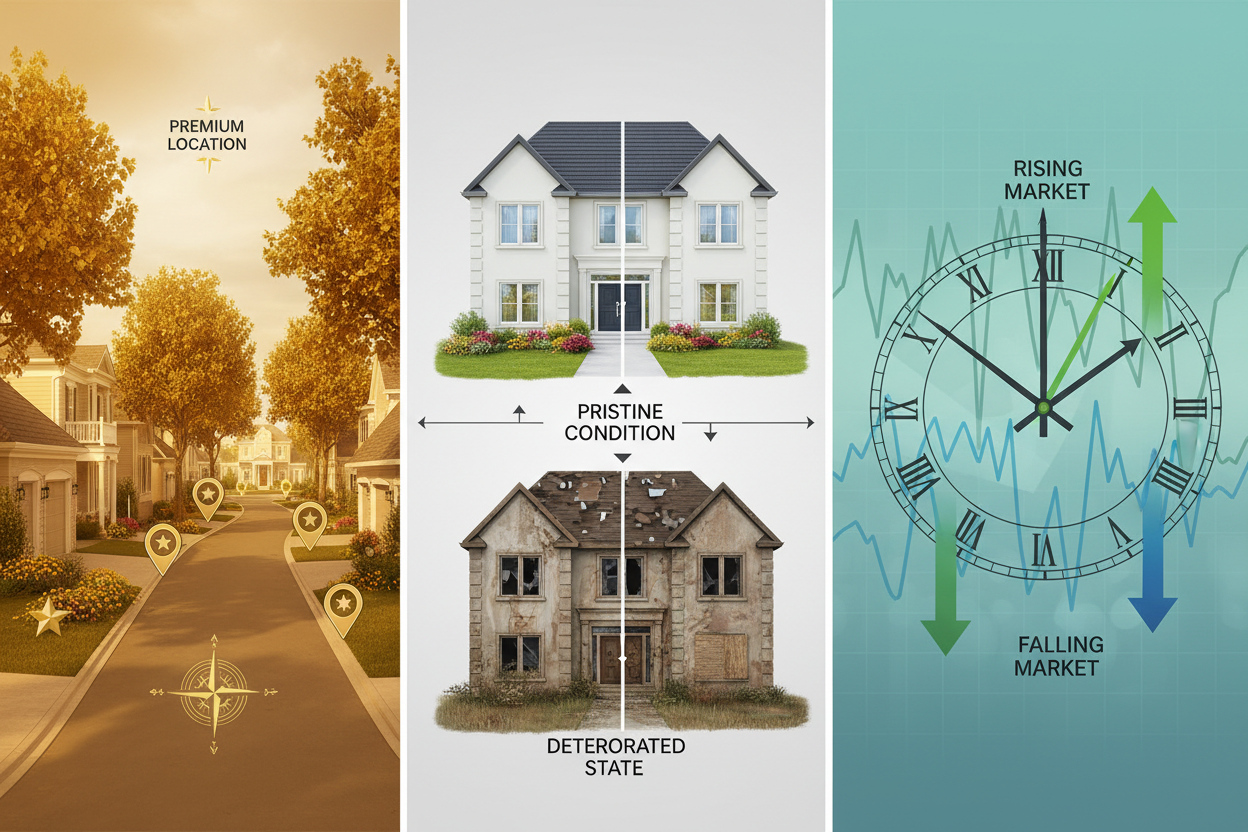
The foundation of any property valuation rests on three key factors: location, condition, and market timing. Location remains the most critical element – a modest home in a prime neighborhood will often outperform a luxury property in a declining area. The property’s physical condition directly impacts both current value and future maintenance costs, while market timing affects everything from purchase price to exit strategy success.
Understanding your local market dynamics is essential. Every neighborhood has its own rhythm, from seasonal fluctuations to long-term development trends. Smart investors spend time walking neighborhoods, talking to residents, and observing patterns that data alone might not reveal.
The Comparative Market Analysis Approach
One of the most reliable methods for property valuation is the Comparative Market Analysis, or CMA. This approach involves analyzing recently sold properties that are similar to your target investment in terms of size, location, age, and condition.
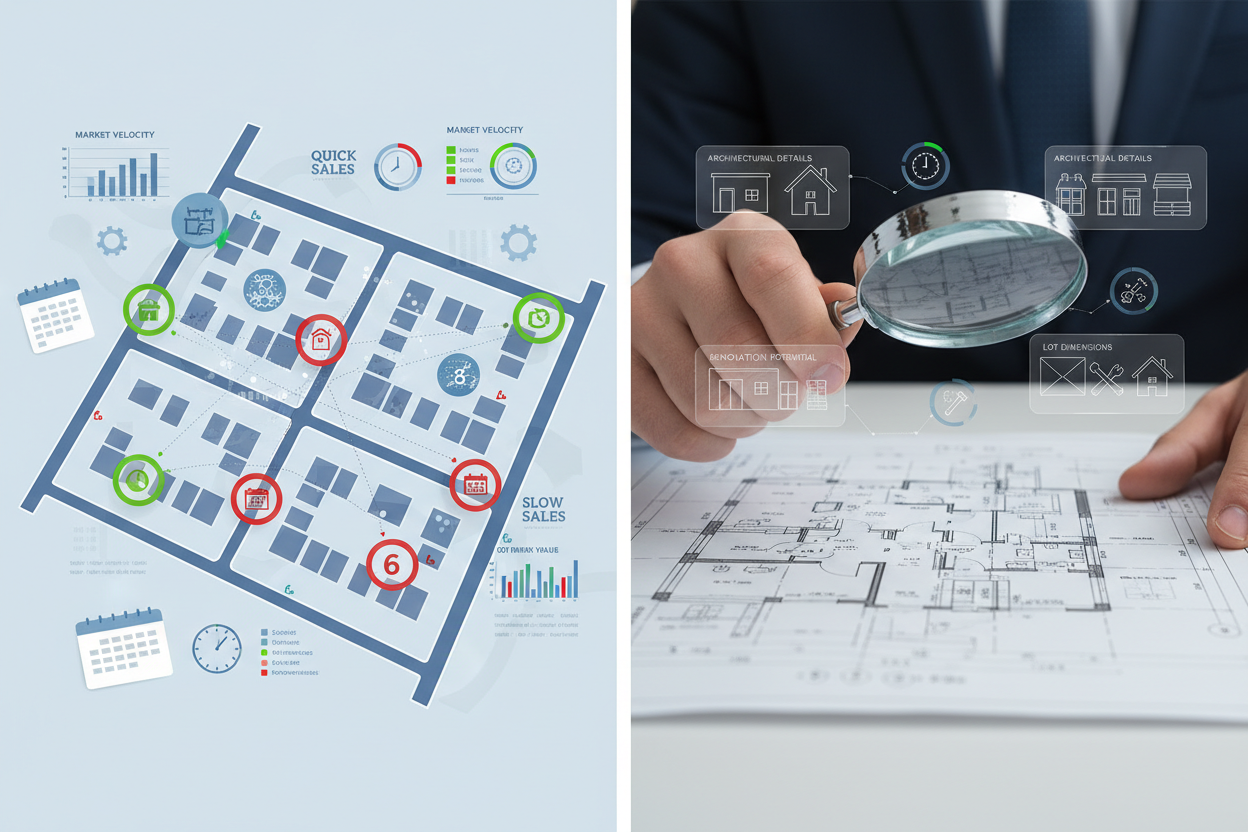
When conducting a CMA, focus on properties sold within the last three to six months in the immediate area. Look beyond just square footage and bedroom count – consider lot size, architectural style, updates, and unique features that might affect value. Pay particular attention to properties that sold quickly versus those that lingered on the market, as this can reveal important insights about buyer preferences and pricing strategies.
The key to an effective CMA is making appropriate adjustments for differences between properties. If your target property has an updated kitchen but the comparable sale doesn’t, you’ll need to factor in that additional value. Conversely, if your property needs a new roof while the comparable doesn’t, that’s a cost you’ll need to subtract from your valuation.
Income-Based Valuation Methods
For investment properties, income-based valuation methods provide crucial insights into a property’s earning potential. The most common approaches include the capitalization rate method and gross rent multiplier analysis.
The capitalization rate, or cap rate, is calculated by dividing the property’s annual net operating income by its current market value. This metric helps you compare different investment opportunities and assess whether a property’s income justifies its price. Generally, higher cap rates indicate better returns, but they often come with higher risk or less desirable locations.
Gross rent multiplier analysis offers a quicker, though less precise, method for evaluating rental properties. Simply divide the property’s purchase price by its annual gross rental income. This ratio helps you quickly compare multiple properties and identify those that might offer better value propositions.
Remember that rental income potential isn’t static. Research local rental trends, vacancy rates, and upcoming developments that might affect demand. A property in an area experiencing job growth or infrastructure improvements may justify a higher valuation based on future income potential.
Identifying Value-Add Opportunities
The most successful property investors excel at spotting opportunities to increase value through strategic improvements. This skill separates average investors from those who consistently outperform the market.
Start by identifying properties with obvious cosmetic issues that scare away typical buyers but don’t represent structural problems. Outdated kitchens, worn flooring, and poor landscaping can significantly depress a property’s value while being relatively inexpensive to address. These “lipstick renovations” often provide the highest return on investment.
Look for properties with unused potential – unfinished basements that could become rental units, large lots suitable for additions, or commercial properties that could be converted to mixed-use developments. Zoning research is crucial here, as regulatory changes can unlock tremendous value or, conversely, limit your options.
Consider the neighborhood’s trajectory when evaluating value-add potential. A modest property in a rapidly improving area might justify more extensive renovations than a similar property in a stagnant market. Sometimes the best value-add opportunity is simply holding a well-located property while the neighborhood appreciates around it.
Advanced Valuation Techniques for Serious Investors
Experienced investors often employ more sophisticated valuation methods to gain competitive advantages. The discounted cash flow analysis projects future income streams and expenses, then calculates their present value using a discount rate that reflects the investment’s risk level.
This method requires more detailed assumptions about future rents, expenses, and market conditions, but it provides a more nuanced view of a property’s long-term value. It’s particularly useful for properties in transitioning neighborhoods or those requiring significant capital improvements over time.
Another advanced technique involves analyzing replacement cost – what it would cost to build a similar property from scratch today. This approach is especially valuable in markets where land values are high or when evaluating unique properties with few comparable sales. If you can acquire a property for significantly less than its replacement cost, you may have found an excellent opportunity.
Consider also the concept of highest and best use analysis. This involves determining the most profitable legal use of a property, which may differ from its current use. A single-family home in a commercial corridor might be worth more as a small office building, while a large residential lot might be more valuable if subdivided.
Common Valuation Mistakes to Avoid
Even experienced investors can fall into valuation traps that lead to poor investment decisions. One of the most common mistakes is over-relying on automated valuation models without understanding their limitations. These computer-generated estimates can be useful starting points, but they often miss important local factors and property-specific details.
Another frequent error is failing to account for all ownership costs when evaluating investment properties. Property taxes, insurance, maintenance, and management fees can significantly impact returns. Always factor in realistic expense ratios – typically 40-50% of gross income for rental properties – rather than optimistic projections.
Don’t let emotions drive your valuation decisions. It’s easy to fall in love with a property’s potential and overlook its flaws or overestimate improvement costs. Maintain objectivity by always having multiple exit strategies and conservative financial projections.
Market timing mistakes are also costly. Buying at market peaks or assuming that rapid appreciation will continue indefinitely can lead to disappointing returns. Focus on properties that make financial sense at current market conditions rather than betting on continued price increases.
Technology Tools for Modern Property Valuation
Today’s investors have access to sophisticated technology tools that can streamline and improve the valuation process. Online platforms provide access to comparable sales data, rental market information, and neighborhood analytics that would have taken weeks to gather just a few years ago.
Property analysis software can help you quickly run multiple scenarios and sensitivity analyses, showing how changes in key variables affect your investment returns. These tools are particularly valuable for evaluating complex properties or comparing multiple investment opportunities.
Don’t overlook the value of geographic information systems and mapping tools. These can reveal important location factors like proximity to transportation, schools, and employment centers that significantly impact property values.
However, remember that technology is a tool, not a replacement for market knowledge and investment experience. The most successful investors combine technological capabilities with boots-on-the-ground research and local market expertise.
Building Your Property Valuation Expertise
Developing strong valuation skills takes time and practice, but the investment in learning pays dividends throughout your real estate career. Start by focusing on one geographic area and property type until you develop deep expertise, then gradually expand your knowledge base.
Network with other investors, real estate professionals, and local experts who can provide insights into market trends and valuation nuances. Join local real estate investment groups and attend property tours to see how experienced investors evaluate opportunities.
Keep detailed records of your valuation analyses and track how your predictions compare to actual market performance. This feedback loop helps you refine your techniques and identify areas where your analysis might be consistently optimistic or conservative.
Stay informed about local economic trends, zoning changes, and development plans that could affect property values. Subscribe to local business publications and attend city planning meetings to stay ahead of market-moving developments.
Property valuation mastery is an ongoing journey rather than a destination. Markets evolve, new technologies emerge, and economic conditions change, requiring continuous learning and adaptation. The investors who consistently succeed are those who remain curious, analytical, and committed to improving their valuation skills over time.
By applying these techniques systematically and avoiding common pitfalls, you’ll be well-positioned to identify undervalued properties, maximize your investment returns, and build lasting wealth through real estate. Remember that successful investing isn’t about finding the perfect deal – it’s about consistently making good decisions based on thorough analysis and sound valuation principles.
Frequently Asked Questions
How often should I revalue my investment properties?
You should conduct formal revaluations annually for portfolio management purposes, but monitor market conditions continuously. Significant market changes, major improvements, or changes in neighborhood dynamics may warrant more frequent valuations.
What’s the most important factor in property valuation?
Location consistently ranks as the most critical factor, but the relative importance of factors can vary by market and property type. In investment properties, income potential often takes priority, while in residential sales, condition and comparable sales carry more weight.
How accurate are online property valuation tools?
Online tools provide useful starting points but typically have accuracy rates of 70-80% within 5-10% of actual value. They work best for standard properties in areas with frequent sales but struggle with unique properties or rapidly changing markets.
Should I hire a professional appraiser for investment properties?
Professional appraisals are valuable for major purchases, refinancing, or when you need an unbiased third-party opinion. For initial screening and portfolio management, developing your own valuation skills is more cost-effective and provides better market insights.
How do I account for future market changes in my valuation?
Focus on conservative assumptions and stress-test your valuations under different scenarios. Consider factors like job growth, infrastructure development, and demographic trends, but avoid overly optimistic projections. Build in safety margins for unexpected market downturns.
What’s the difference between market value and investment value?
Market value represents what a typical buyer would pay in the current market, while investment value reflects what a specific property is worth to you based on your investment criteria, financing capabilities, and strategic goals. Investment value can be higher or lower than market value depending on your situation.
Free Stuff!
Add CTA sections description.