


Creative Equity Placement Solutions for Commercial Real Estate: Unlocking Capital for Your Next Investment
The commercial real estate landscape has evolved dramatically over the past decade, and traditional financing methods don’t always cut it anymore. Whether you’re a seasoned developer looking to expand your portfolio or a newcomer seeking to break into the market, finding the right equity placement solution can make or break your investment dreams. Today’s savvy investors are turning to innovative approaches that go beyond conventional bank loans and standard partnership structures.
In this comprehensive guide, we’ll explore the most effective creative equity placement solutions that are reshaping how commercial real estate deals get funded. From crowdfunding platforms to joint venture structures, these strategies are helping investors access capital, reduce risk, and maximize returns in ways that weren’t possible just a few years ago.

Understanding Modern Commercial Real Estate Equity Placement
Before diving into specific solutions, it’s crucial to understand what equity placement actually means in today’s commercial real estate context. Simply put, equity placement involves securing investment capital in exchange for ownership stakes in commercial properties or real estate ventures. Unlike debt financing, where you’re borrowing money that must be repaid with interest, equity placement means sharing both the risks and rewards of your investment with partners or investors.
The traditional model typically involved finding a handful of wealthy individuals or institutional investors willing to put up significant capital. While this approach still works, it often requires extensive personal networks and can limit your options. Modern equity placement solutions have democratized access to capital, creating opportunities for smaller investors to participate and giving property owners more flexible funding options.

Digital Crowdfunding Platforms: The Game Changer
One of the most revolutionary developments in commercial real estate equity placement has been the rise of digital crowdfunding platforms. These online marketplaces connect property developers and owners with a broad network of potential investors, from accredited individuals to institutional funds.
Platforms like EquityMultiple, RealtyMogul, and CrowdStreet have transformed how deals get funded. Instead of needing to find one investor willing to commit millions, you can now raise capital from dozens or even hundreds of smaller investors. This approach offers several advantages: it reduces your dependence on any single investor, allows for faster capital raising, and often provides more favorable terms than traditional financing.
The key to success with crowdfunding platforms lies in presenting your deal professionally and transparently. Investors on these platforms are sophisticated and expect detailed financial projections, market analysis, and clear exit strategies. The good news is that most platforms provide guidance on structuring your offering and often have their own due diligence processes that can add credibility to your project.
Joint Venture Partnerships: Sharing Risk and Expertise
Joint ventures represent another powerful equity placement solution that’s gained tremendous popularity in commercial real estate. Rather than simply seeking passive investors, joint ventures involve partnering with other real estate professionals, developers, or investment groups who bring both capital and expertise to the table.
These partnerships can take many forms. You might partner with a construction company that provides both building expertise and capital, or team up with a property management firm that brings operational knowledge and investor relationships. The beauty of joint ventures lies in their flexibility – you can structure deals where partners contribute different combinations of capital, expertise, and sweat equity.
One particularly effective approach is the “promote structure,” where the general partner (often the deal sponsor) receives a disproportionate share of profits after investors achieve certain return thresholds. This aligns interests and can make deals attractive to both passive investors and active partners.
Real Estate Investment Trusts (REITs) and Fund Structures
For larger-scale projects or investors looking to build diversified portfolios, creating or partnering with Real Estate Investment Trust structures offers sophisticated equity placement opportunities. While forming your own REIT requires significant capital and regulatory compliance, partnering with existing REITs or creating fund structures can provide access to institutional capital.
Private REITs, in particular, have become increasingly popular for commercial real estate equity placement. These structures allow for greater flexibility than public REITs while still providing the tax advantages and professional management that institutional investors seek. Many successful developers now create their own private REIT structures to continuously raise capital for their pipeline of projects.
Fund structures also allow for creative equity placement by pooling multiple properties or development projects under a single investment vehicle. This approach can be particularly attractive to investors who want exposure to commercial real estate but prefer the diversification that comes with a portfolio approach rather than investing in individual properties.
Opportunity Zones: Tax-Advantaged Equity Solutions
The Opportunity Zone program, established through the Tax Cuts and Jobs Act of 2017, has created unprecedented opportunities for creative equity placement in commercial real estate. These zones, located in economically distressed communities, offer significant tax advantages for investors who commit capital gains to qualified projects.
Opportunity Zone investments can defer capital gains taxes until 2026, reduce the tax burden on those gains by up to 15%, and completely eliminate taxes on any appreciation from the Opportunity Zone investment itself if held for at least ten years. These benefits have attracted billions of dollars in investment capital and created new equity placement opportunities for projects in designated zones.
Successful Opportunity Zone equity placement requires careful structuring and compliance with complex regulations, but the tax benefits can make projects attractive to high-net-worth individuals and family offices looking to deploy capital gains while supporting community development.
Alternative Investment Structures and Creative Financing
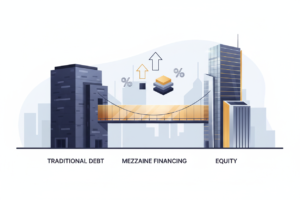
Beyond traditional equity and debt, creative commercial real estate professionals are exploring hybrid structures that combine elements of both. Preferred equity, mezzanine financing, and convertible instruments offer flexible solutions that can be tailored to specific project needs and investor preferences.
Preferred equity, for instance, typically offers investors a fixed return plus participation in upside, providing more security than common equity while still allowing for significant returns. Mezzanine financing bridges the gap between debt and equity, often featuring higher interest rates than traditional loans but with equity kickers that provide additional returns if projects perform well.
Sale-leaseback arrangements represent another creative approach where property owners sell their real estate to investors and then lease it back for their operations. This strategy can unlock capital for expansion while allowing businesses to remain in their current locations.
Building Investor Relationships for Long-Term Success
Regardless of which equity placement solution you choose, success in commercial real estate ultimately depends on building strong, long-term relationships with investors and partners. The best deals often come from repeat investors who trust your expertise and track record.
Transparency and communication are crucial. Regular updates on project progress, honest discussions about challenges, and clear reporting on financial performance help build the trust that leads to future investment opportunities. Many successful real estate professionals create investor newsletters, host annual meetings, and maintain active communication with their investor base.
Technology has made relationship management easier than ever. Customer relationship management (CRM) systems designed for real estate can help track investor preferences, communication history, and investment capacity, making it easier to match the right investors with appropriate opportunities.
Frequently Asked Questions
What is the minimum investment typically required for commercial real estate equity placement?
Investment minimums vary widely depending on the structure and platform. Crowdfunding platforms often have minimums as low as $1,000 to $5,000, while private placements typically require $25,000 to $100,000 or more. Direct real estate investments usually require significantly higher minimums, often $250,000 or more.
How do I evaluate the credibility of equity placement opportunities?
Look for detailed financial projections, third-party market analysis, clear exit strategies, and transparent fee structures. Verify the track record of sponsors and review any available references from previous investors. For crowdfunding platforms, check their regulatory compliance and investor protection measures.
What are the typical returns for commercial real estate equity investments?
Returns vary significantly based on property type, location, and market conditions. Generally, investors target annual returns of 8-15% for stabilized properties and 15-25% or higher for development projects. However, higher returns typically come with increased risk.
How long are commercial real estate equity investments typically held?
Hold periods vary by strategy but typically range from 3-7 years for value-add projects and 5-10 years for development projects. Some income-producing properties may be held indefinitely, while others are specifically structured for shorter-term exits.
What tax implications should I consider with commercial real estate equity investments?
Commercial real estate investments can offer various tax benefits, including depreciation deductions, potential capital gains treatment, and opportunities for tax-deferred exchanges. Opportunity Zone investments provide additional tax advantages. Consult with a tax professional to understand the specific implications for your situation.
The world of commercial real estate equity placement continues to evolve, driven by technology, regulatory changes, and shifting investor preferences. By understanding and leveraging these creative solutions, both property owners and investors can access new opportunities and achieve better outcomes than traditional financing methods might allow. Success requires careful planning, professional execution, and a commitment to building lasting relationships in the commercial real estate community.
Free Stuff!
Add CTA sections description.