

Understanding the Nuances of Mezzanine Financing: A Comprehensive Guide for Business Growth
When traditional bank loans don’t quite fit the bill and equity financing feels too dilutive, savvy business owners often find themselves exploring the middle ground of mezzanine financing. This sophisticated funding mechanism has quietly powered countless success stories across industries, yet many entrepreneurs remain unfamiliar with its intricacies and potential benefits.
Mezzanine financing represents a unique blend of debt and equity that can bridge the gap between conventional lending and full equity investment. Whether you’re planning an expansion, considering an acquisition, or preparing for an eventual exit strategy, understanding mezzanine financing could unlock new possibilities for your business growth journey.

What Is Mezzanine Financing and How Does It Work?
At its core, mezzanine financing is a hybrid form of capital that combines elements of both debt and equity financing. Think of it as the financial equivalent of a Swiss Army knife – versatile, practical, and designed to handle situations where traditional tools fall short.
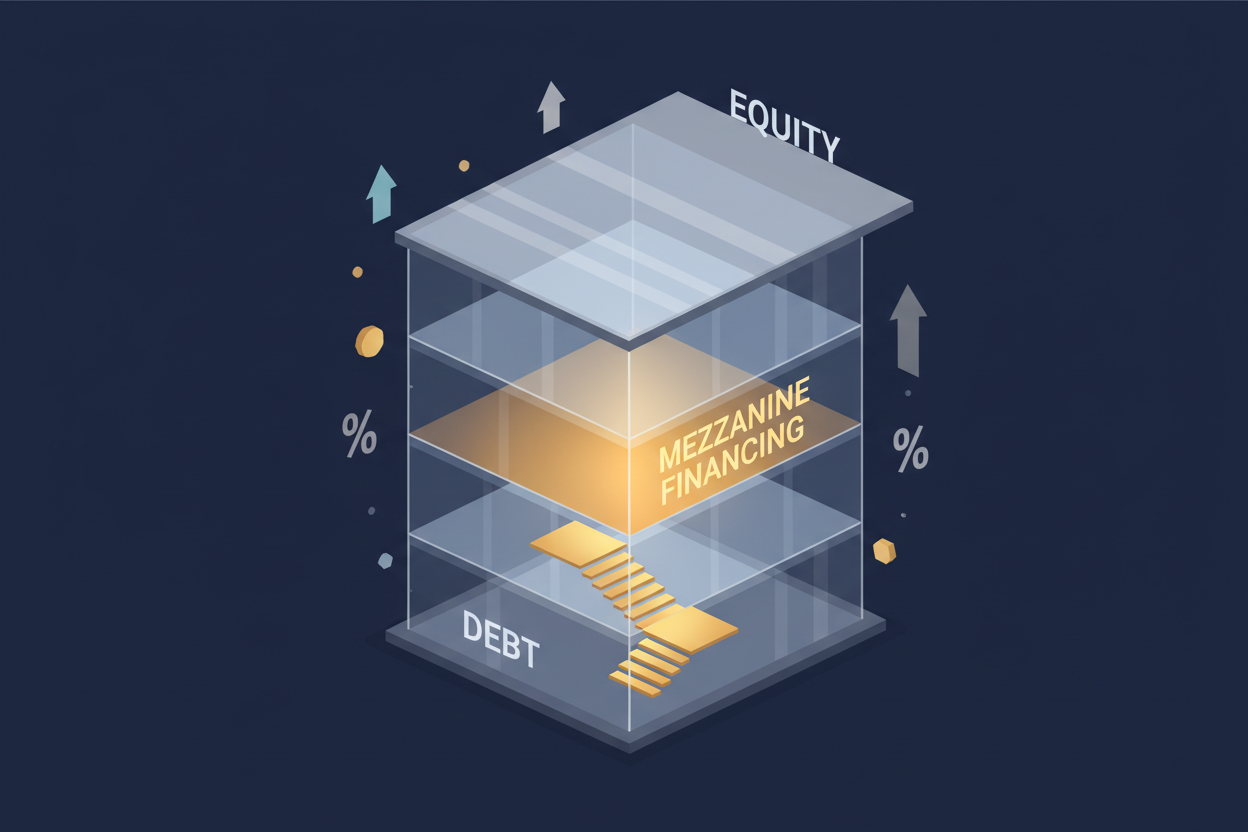
This financing structure typically involves a loan that carries a higher interest rate than traditional debt, but also includes equity components such as warrants, options, or conversion features. The “mezzanine” terminology comes from architecture, referring to the intermediate floor between main floors of a building – perfectly capturing this financing method’s position between debt and equity.

Mezzanine lenders usually target established companies with proven track records, stable cash flows, and clear growth trajectories. Unlike venture capitalists who might invest in early-stage startups, mezzanine investors prefer businesses that have moved beyond the startup phase but still need capital to reach their next level of growth.
Key Characteristics of Mezzanine Capital
Understanding the distinctive features of mezzanine financing helps explain why it has become increasingly popular among both borrowers and investors. The flexibility inherent in these arrangements often makes them attractive alternatives to traditional financing options.
Mezzanine debt typically carries interest rates ranging from 12% to 20%, significantly higher than conventional bank loans but often more palatable than giving up substantial equity. The higher cost reflects the increased risk that mezzanine lenders assume, as their position falls between senior debt and equity in the capital structure.
Most mezzanine arrangements include some form of equity participation, allowing lenders to benefit from the company’s future success. This might come through warrants that can be exercised at predetermined prices, conversion features that allow debt to be exchanged for equity, or direct equity stakes alongside the debt component.
Payment structures in mezzanine financing often provide more flexibility than traditional loans. Many arrangements allow for interest-only payments during the initial period, with principal repayment deferred until the loan matures. Some structures even permit payment-in-kind (PIK) interest, where interest payments are added to the principal balance rather than paid in cash.
When Mezzanine Financing Makes Strategic Sense
Timing is everything in finance, and mezzanine capital shines in specific scenarios where other funding sources may not align with business objectives. Recognizing these situations can help entrepreneurs make informed decisions about their capital structure.
Management buyouts represent one of the most common applications of mezzanine financing. When existing management teams want to acquire their company but lack sufficient capital, mezzanine funding can bridge the gap without requiring them to give up majority control to outside investors.
Growth capital needs often align perfectly with mezzanine financing characteristics. Companies experiencing rapid expansion may need substantial capital for inventory, equipment, or market expansion, but traditional lenders might view the growth plans as too risky while equity investors might demand too much ownership.
Acquisition financing represents another sweet spot for mezzanine capital. When companies identify strategic acquisition opportunities but don’t want to dilute existing shareholders significantly, mezzanine financing can provide the necessary funds while preserving ownership structure.
Recapitalization scenarios also benefit from mezzanine structures. Existing shareholders might want to take some money off the table without selling the entire company, and mezzanine financing can facilitate these partial liquidity events.
Advantages and Benefits for Growing Businesses
The appeal of mezzanine financing extends beyond its hybrid nature, offering several compelling advantages that make it attractive for the right businesses at the right time.
Preservation of control stands out as perhaps the most significant benefit. Unlike equity financing that typically requires giving up board seats and decision-making authority, mezzanine financing usually allows existing management to maintain operational control while accessing needed capital.
Flexibility in repayment terms provides breathing room for growing companies. The ability to defer principal payments or even interest payments in some structures allows businesses to focus cash flow on growth initiatives rather than debt service during critical expansion phases.
Speed of execution often favors mezzanine financing over other alternatives. While equity raises can take months to complete due diligence and negotiations, mezzanine transactions typically close faster because the due diligence process is often less extensive than equity investments.
Tax advantages also merit consideration. Interest payments on the debt portion of mezzanine financing are typically tax-deductible, providing some offset to the higher cost of capital compared to equity financing.
Potential Drawbacks and Risk Considerations
Like any financial instrument, mezzanine financing comes with potential downsides that require careful consideration before moving forward with this funding approach.
The higher cost of capital represents the most obvious drawback. Interest rates significantly above traditional bank financing can impact cash flow and profitability, particularly if business performance doesn’t meet projections.
Covenant restrictions, while typically less onerous than traditional bank loans, still exist in most mezzanine arrangements. These might include limitations on additional debt, dividend payments, or major business decisions that could constrain operational flexibility.
Dilution risk, while lower than pure equity financing, still exists through the equity components of mezzanine structures. Warrants and conversion features mean that successful companies might ultimately give up more ownership than initially anticipated.
Market timing considerations can also work against borrowers. If business performance declines or market conditions deteriorate, the higher cost of mezzanine capital can become particularly burdensome compared to traditional financing alternatives.
The Mezzanine Financing Process: From Application to Closing
Navigating the mezzanine financing process requires understanding the typical timeline and requirements that distinguish it from other funding approaches.
Initial preparation involves assembling comprehensive financial documentation, including historical financial statements, projections, and detailed business plans. Mezzanine lenders typically want to see at least three years of audited financials and detailed projections showing how the capital will be deployed and repaid.
Due diligence in mezzanine transactions focuses heavily on cash flow stability and growth prospects. Lenders will scrutinize customer concentration, market position, management team capabilities, and competitive dynamics to assess the likelihood of successful repayment.
Term sheet negotiations represent a critical phase where the basic structure gets established. Key terms include interest rates, equity participation features, repayment schedules, and various covenants that will govern the relationship.
Documentation and closing typically take 60 to 90 days from term sheet execution, assuming no major issues arise during due diligence. The complexity of mezzanine structures often requires more extensive legal documentation than traditional loans.
Choosing the Right Mezzanine Partner
Success with mezzanine financing often depends as much on the lender relationship as on the specific terms negotiated. Finding the right partner requires evaluating multiple factors beyond just pricing.
Industry expertise should rank high on the evaluation criteria. Mezzanine lenders with deep knowledge of your specific industry bring valuable insights and realistic expectations about business cycles, growth patterns, and potential challenges.
Portfolio company support varies significantly among mezzanine providers. Some focus purely on financial returns, while others offer operational guidance, strategic advice, and networking opportunities that can add substantial value beyond the capital provided.
Reputation and track record matter enormously in mezzanine relationships. Speaking with other portfolio companies can provide insights into how the lender behaves during both good times and challenging periods.
Cultural fit shouldn’t be overlooked. Since mezzanine relationships typically last several years, compatibility in communication styles, decision-making processes, and business philosophies can significantly impact the overall experience.
Conclusion
Mezzanine financing occupies a unique and valuable position in the capital markets, offering growing companies access to substantial funding while preserving control and providing flexibility that traditional debt and equity alternatives often cannot match. The hybrid nature of these instruments creates opportunities for creative structuring that can align the interests of both borrowers and lenders.
Success with mezzanine financing requires careful consideration of timing, thorough preparation, and thoughtful selection of the right lending partner. While the higher cost of capital demands respect, the strategic benefits often justify the expense for companies in the right circumstances.
As markets continue to evolve and traditional lending becomes increasingly commoditized, mezzanine financing will likely play an even more important role in supporting business growth and facilitating strategic transactions. Understanding these nuances today positions entrepreneurs and business leaders to make informed decisions when the right opportunity presents itself.
Frequently Asked Questions
What is the typical interest rate for mezzanine financing?
Mezzanine financing typically carries interest rates between 12% and 20%, depending on the company’s risk profile, market conditions, and specific deal structure. This rate is higher than traditional bank loans but often includes equity upside that can benefit the company if performance exceeds expectations.
How much equity do I typically give up with mezzanine financing?
Unlike pure equity financing, mezzanine deals usually involve minimal immediate equity dilution. However, equity components like warrants or conversion features might result in 5-20% dilution if exercised, depending on the company’s future performance and valuation.
What size companies typically use mezzanine financing?
Mezzanine financing is most common among companies with annual revenues between $10 million and $500 million, though deals can range from smaller amounts for niche businesses to hundreds of millions for larger transactions. The key is having stable cash flows and clear growth prospects.
How long does the mezzanine financing process typically take?
From initial contact to closing, mezzanine financing typically takes 60 to 120 days, depending on deal complexity and due diligence requirements. This is generally faster than equity raises but longer than traditional bank financing.
Can mezzanine financing be prepaid early?
Most mezzanine arrangements include prepayment options, though they often come with prepayment penalties or premiums, especially in the early years. These penalties compensate lenders for the equity upside they might lose through early repayment.
What happens if my company can’t meet the repayment terms?
Mezzanine lenders typically work with borrowers to restructure terms rather than immediately demanding repayment. Options might include extending maturity dates, converting debt to equity, or modifying payment schedules. However, persistent payment issues could ultimately lead to lender control or forced sale scenarios.
Free Stuff!
Add CTA sections description.